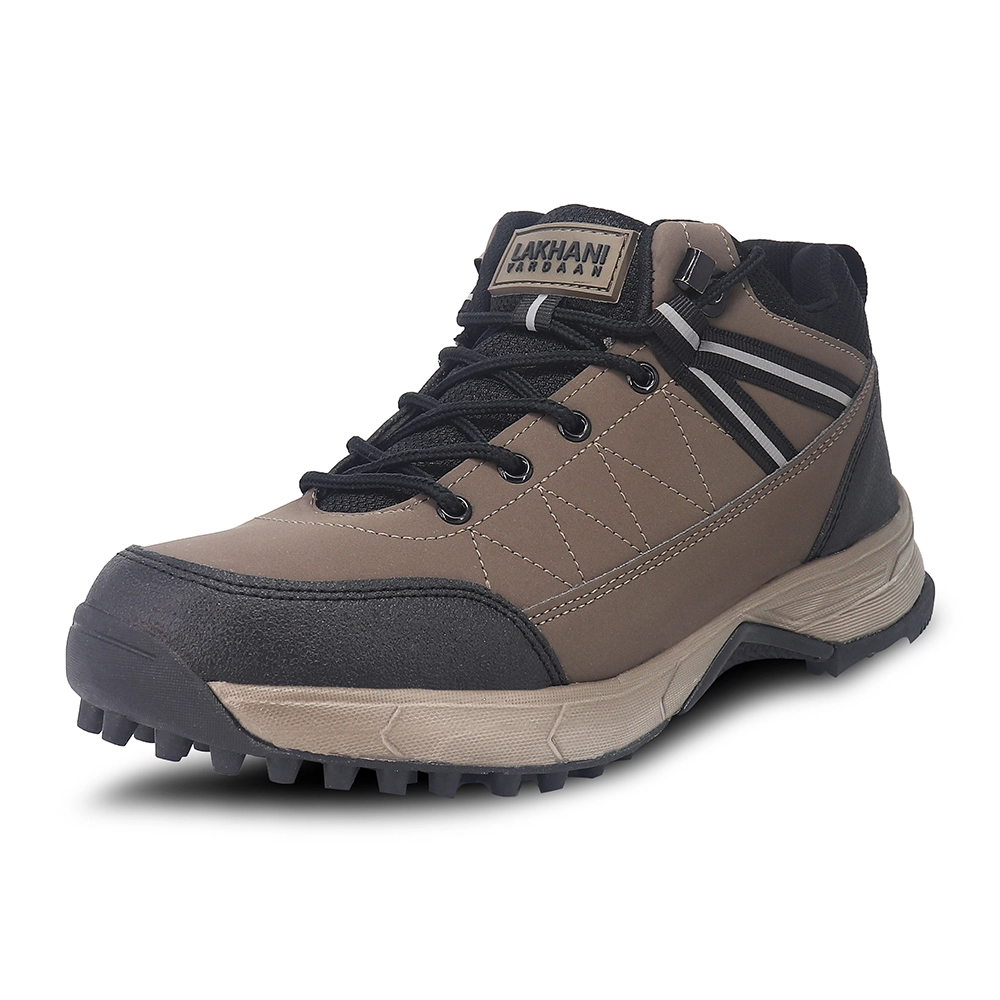
Hiking Boots for Men
Explore Lakhani hiking boots for men, designed for outdoor movement across uneven trails, rough paths and demanding everyday conditions. Their rugged construction combines a waterproof synthetic leather or suede upper, a high-traction rubber sole with deep lugs and a supportive ankle collar.
These men’s hiking boots are suited to people who need sturdy outdoor footwear with dependable grip, structured coverage and added support around the ankle. The lace-up design helps secure the foot, while the reinforced construction prepares the boots for regular outdoor use and heavier wear.
Browse the Lakhani hiking boot range and choose a pair according to your size, fit, planned terrain and outdoor routine.
Rugged Hiking Boots for Outdoor Use
Outdoor footwear must handle conditions that are different from ordinary city surfaces. Loose soil, stones, uneven paths and changing weather can place additional demands on the feet and footwear.
Lakhani hiking boots are built with a structured upper and rugged outsole to support outdoor movement. The high-cut design provides greater coverage around the ankle than low-cut casual shoes, while the deep-lug sole is designed to improve contact with uneven surfaces.
Their strong appearance and practical construction make them suitable for trekking, trail walking, outdoor travel and activities where additional foot coverage is preferred.
Key Features of Lakhani Hiking Boots
Waterproof Synthetic Leather or Suede Upper
Depending on the selected model, the upper is made using waterproof synthetic leather or suede. The material provides structured coverage around the foot and helps prepare the footwear for changing outdoor conditions.
The upper should still be cleaned and maintained according to its material. Waterproof construction can help manage light exposure to moisture, but footwear should not be treated as suitable for prolonged submersion unless specifically stated.
High-Traction Rubber Outsole
The rubber outsole is designed to create reliable contact with outdoor surfaces. Its rugged construction helps the boot remain practical on dirt tracks, rocky paths and uneven ground.
The level of grip experienced may vary according to the surface, weather, outsole condition and walking technique.
Deep-Lug Sole Pattern
Deep lugs create a pronounced tread pattern beneath the boot. This type of outsole design is useful when walking across loose soil, gravel and irregular outdoor surfaces.
Mud, stones and other material can collect between the lugs, so the sole should be checked and cleaned after outdoor use.
Ankle Support Collar
The supportive collar surrounds the ankle area and provides additional structure compared with low-cut footwear. This added coverage can help the boot feel more secure during movement across uneven terrain.
The collar should sit comfortably without rubbing or creating pressure around the ankle.
Secure Lace-Up Design
The lace-up construction allows the fit to be adjusted across the foot and ankle. Proper lacing helps hold the heel in position and reduces unnecessary movement within the boot.
The laces should feel firm but should not restrict circulation or natural movement.
Hiking Boots for Trekking and Trail Walking
Trekking routes can include loose ground, inclines, stones and uneven sections. Footwear selected for these routes should provide suitable coverage, grip and fit.
Lakhani trekking boots for men feature deep-lug rubber soles and supportive ankle collars for rugged outdoor use. Their high-cut shape provides additional coverage, while the structured upper helps protect the foot from common trail contact.
Before using hiking boots on a longer route, wear them during shorter walks. This allows you to check the fit, identify pressure areas and adjust the laces before spending several hours outdoors.
The footwear should also be selected according to the difficulty of the route, expected weather and amount of equipment being carried.
Waterproof Hiking Boots for Changing Conditions
Outdoor routes may include damp grass, wet soil, light rain or shallow surface water. Waterproof hiking boots provide a useful level of protection when conditions change during a walk.
The waterproof synthetic leather or suede upper helps reduce direct exposure to light moisture. However, water may still enter through the opening or other areas if the boots are used in deep water or prolonged heavy rain.
After exposure to moisture, remove surface dirt and allow the boots to dry naturally in a ventilated place. Avoid strong direct heat, as it may affect the upper, sole or adhesive.
Ankle Support for Uneven Terrain
Uneven trails require frequent changes in foot position. A high-cut hiking boot provides more coverage around the ankle than a low-cut shoe.
The ankle support collar on Lakhani hiking boots is designed to provide a secure and structured feel. Correct sizing remains important because a loose boot may allow excessive foot movement, while an overly tight collar can create discomfort.
The boot should hold the heel properly and feel stable during normal walking. Lacing around the ankle can be adjusted according to the level of hold required.
How to Choose the Right Hiking Boots
Select the Correct Size
Your toes should have enough room to move naturally without touching the front of the boot. This is especially important while walking downhill, when the foot may shift slightly forward.
The heel should remain secure and should not lift excessively with each step.
Check the Width
The sides of the boot should hold the foot without squeezing it. People with wider feet should consider the overall shape of the footwear rather than relying only on the marked size.
Wear Suitable Socks
Try hiking boots with the type of socks you plan to wear outdoors. Thick trekking socks can change the fit compared with regular everyday socks.
Examine the Ankle Collar
The collar should sit comfortably around the ankle without rubbing. Walk, bend and move the foot to check whether the support feels natural.
Review the Sole
Check the deep-lug outsole and ensure it is suitable for the surfaces you expect to encounter. Grip requirements can differ between dry trails, wet ground and rocky paths.
Consider the Route
Choose footwear according to the expected terrain, walking duration, weather and difficulty of the outdoor activity.
How Should Hiking Boots Fit?
Hiking boots should fit securely without restricting the foot. The toes should have enough space, the heel should remain in position and the upper should not create sharp pressure.
After putting on the boots, tap the heel gently against the floor so the foot settles at the back. Tighten the laces gradually from the lower section towards the ankle.
Walk on a clean surface and check for heel slipping, toe pressure and rubbing around the collar. Test both boots because the feet may not be exactly the same size.
A properly fitted boot should feel stable while allowing natural movement during walking.
How to Lace Hiking Boots
Loosen the laces before inserting the foot. Once the heel is properly positioned, tighten the lower section evenly.
Keep the forefoot secure without making it uncomfortable. Adjust the upper lacing around the ankle according to the level of hold required.
Before beginning a trail, check that the laces are securely tied and that loose ends cannot catch on branches or uneven ground.
During longer walks, the fit may need to be adjusted as the feet respond to movement and changing conditions.
Where Can Hiking Boots Be Used?
Lakhani hiking boots can be considered for:
- Trail walking
- Trekking routes
- Outdoor travel
- Uneven rural paths
- Rocky or loose ground
- Nature walks
- Rugged everyday outdoor use
The suitability of the boots depends on the specific route and conditions. Always assess the terrain, weather and activity requirements before selecting footwear.
These boots are designed for hiking and outdoor movement rather than specialised climbing, mountaineering or technical expedition use.
Styling Hiking Boots
Hiking boots can be paired with practical outdoor clothing such as cargo trousers, trekking pants, utility trousers and weather-appropriate jackets.
Neutral shades work easily with black, brown, beige, olive and grey outdoor clothing. The rugged high-cut design gives the footwear a functional appearance that suits adventure-inspired outfits.
For travel, pair the boots with comfortable trousers and layered clothing. Ensure the outfit allows easy movement and matches the expected weather conditions.
Cleaning and Maintaining Hiking Boots
Remove loose mud and dirt after each outdoor use. Allow dried dirt to loosen before brushing it away with a soft or medium-bristle brush.
Wipe the upper with a damp cloth according to its material. Suede sections should be treated carefully and cleaned using products intended for suede.
Clean the deep-lug outsole thoroughly because stones and mud may become trapped within the tread pattern.
Allow the boots to dry naturally in a ventilated place. Remove the laces and loosen the opening to improve airflow. Avoid drying them near heaters, flames or strong direct sunlight.
Store the boots only after they are fully dry. Keep them in a clean area where the upper and ankle collar will not be crushed.
Explore Lakhani Hiking Boots
Lakhani hiking boots for men combine rugged construction with outdoor-ready features. Their waterproof synthetic leather or suede upper, high-traction rubber outsole, deep lugs and ankle support collar make them suitable for uneven terrain and demanding outdoor routines.
Compare the available sizes and designs, check the fit carefully and choose footwear according to the terrain you plan to explore.
Frequently Asked Questions
Q1: Are Lakhani hiking boots waterproof?
Ans: The boots feature a waterproof synthetic leather or suede upper. Their performance may depend on the model, conditions and extent of water exposure.
Q2: Do these boots provide ankle support?
Ans: Yes. They feature an ankle support collar designed to provide additional structure around the ankle.
Q3: What type of sole do the boots have?
Ans: They use a high-traction rubber outsole with deep lugs for rugged outdoor surfaces.
Q4: Can hiking boots be used for trekking?
Ans: They can be considered for trekking and trail walking when their fit and construction match the route and expected conditions.
Q5: How should hiking boots fit?
Ans: The heel should remain secure, the toes should have enough space and the ankle collar should not create uncomfortable pressure.
Q6: How should hiking boots be cleaned?
Ans: Remove mud and loose dirt, clean the upper according to its material and clear trapped debris from the outsole. Allow the boots to dry naturally.
Q7: Should hiking boots be worn before a long trek?
Ans: Yes. Wearing them during shorter walks helps confirm the fit and identify any pressure or rubbing before a longer route.