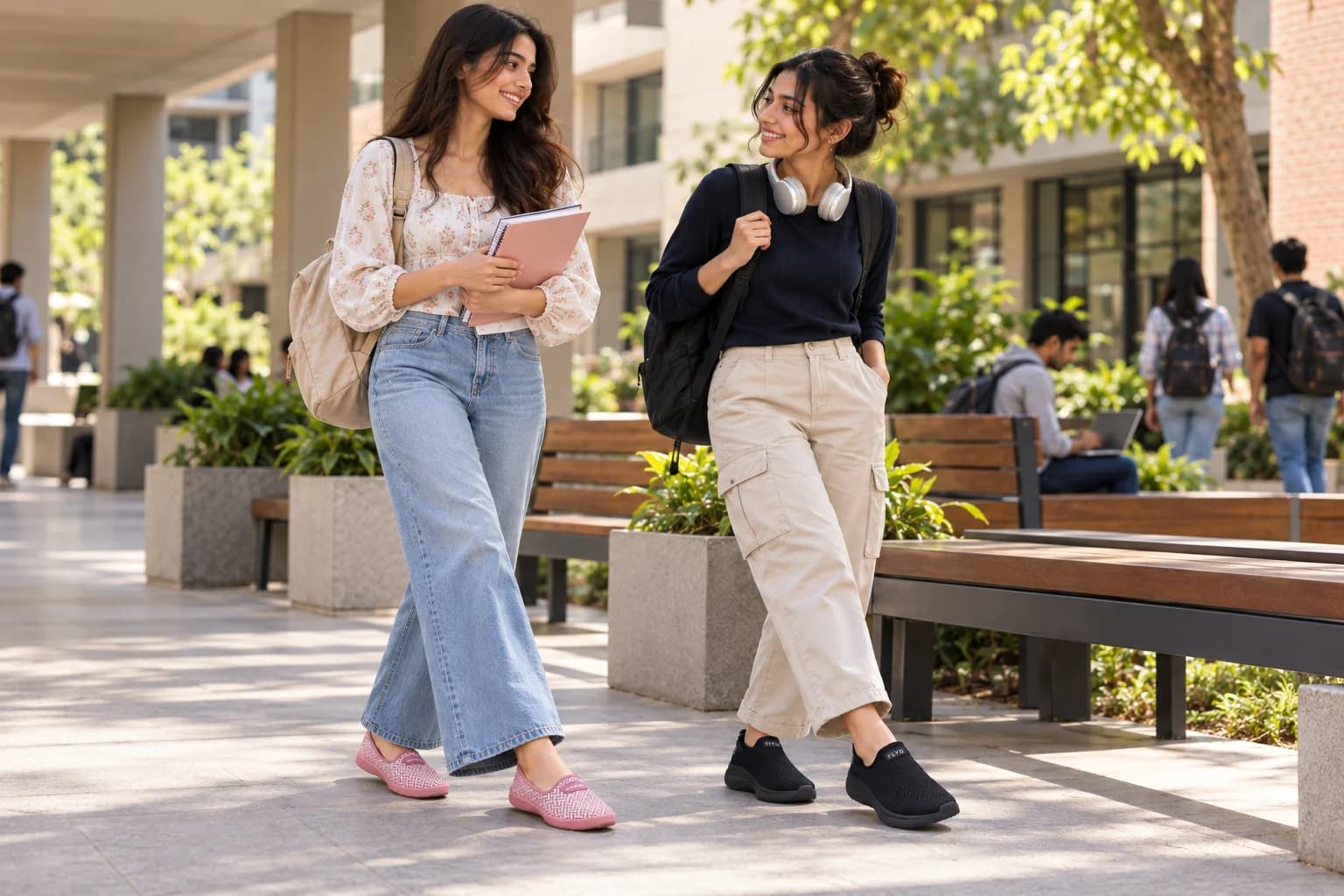
Ballerina Shoes vs Sneakers: Which Are More Comfortable for College?
Ballerina shoes and sneakers can both fit into a college wardrobe, but they solve different needs. Ballerinas offer a lightweight, low-profile appearance that works easily with jeans, kurtis and more polished outfits. Sneakers generally provide more coverage, adjustable fastening and a structure suited to longer periods of walking.
Comfort cannot be decided by category alone. Fit, sole, upper, lining and the wearer’s schedule matter more than the label. A secure ballerina may feel better than a poorly fitting sneaker on a short day; a supportive sneaker may be more practical when the timetable includes a long commute and movement across a large campus.
Ballerina Shoes vs Sneakers: What Are the Main Differences?
Ballerina shoes—also called belly shoes or ballet flats—have a low-cut opening, closed toe and slip-on construction. Their slim profile makes them easy to coordinate with casual and semi-formal clothing. Because they do not use laces, fit around the heel and instep is particularly important.
Sneakers usually cover more of the foot and often use laces or another adjustable fastening. Their soles may be thicker, and their uppers can range from canvas and synthetic material to mesh or knit. Some are designed primarily for casual wear, while others have sport-led construction.
The two categories also differ in visual weight. Ballerinas sit close to the ground and create a softer line. Sneakers appear more casual and can visually balance loose jeans, backpacks and layered outfits.
Which Is More Comfortable for Walking Around Campus?
For repeated walking, a secure fit is essential. The heel should not lift excessively, the toes should have usable room and the sole should flex without collapsing. Sneakers often have an advantage because laces let the wearer adjust the hold and the enclosed upper can reduce movement inside the shoe.
Ballerina shoes can be comfortable for moderate walking when the shape matches the foot and the sole suits the surface. A flat that slips at the heel may cause rubbing. Choosing a smaller size to stop slipping can create toe pressure, so the solution should be a better-fitting shape rather than simply tightening the fit.
Campus surfaces matter. Smooth corridors, stairs, paved paths and uneven outdoor areas place different demands on the outsole. Inspect tread and condition instead of assuming that every sneaker grips well or every flat is slippery.
How Do Ballerina Shoes and Sneakers Compare for Foot Coverage and Fit?
Ballerinas expose more of the upper foot and ankle. This can feel lighter in warm weather and coordinate well with cropped trousers. The low opening, however, provides less material to hold the foot, making heel fit important. Some designs include elastic or a strap, which can change security.
Sneakers cover the sides and top of the foot and generally offer more fastening adjustment. This can help during longer walks, but extra coverage may also feel warmer. Breathability depends on the upper and lining; a mesh sneaker and a closed synthetic sneaker will not feel identical.
Neither category should pinch, cause numbness or require the toes to grip to keep the shoe on. Try footwear later in the day when feet may be slightly fuller, using the socks or liners normally worn to college.
Which Footwear Works Better for Long College Days?
A long college day can include public transport, stairs, lectures, practical sessions, library time and an evening outing. Sneakers are usually the more adaptable choice when movement is extensive because they provide adjustable hold and broader coverage.
Ballerinas can work well on presentation days, shorter schedules or occasions where the outfit needs a neater, less athletic finish. They are also easy to carry as a change of footwear, although the pair should be protected rather than crushed inside a bag.
Weather changes the decision. Open, low-cut flats offer little protection from puddles, while breathable textile sneakers may absorb rain. Neither should be assumed waterproof. During hot weather, sock choice, lining and the ability to air the footwear between uses influence comfort.
Rotation can be more practical than declaring one winner. Alternating between a secure sneaker and a comfortable flat lets students match footwear to the timetable and gives each pair time to air.
Which Looks Better with Jeans, Kurtis and Everyday College Outfits?
Jeans
Sneakers naturally suit straight, relaxed and wide-leg jeans. Ballerinas work particularly well with slim, straight, ankle-length and cropped denim because the shoe remains visible. With very long wide-leg jeans, check that the hem does not drag over a thin flat.
Kurtis and kurtas
Ballerina shoes create a simple polished combination with straight pants, leggings and many kurtis. Minimal sneakers give cotton kurtas and short kurtis a contemporary campus look. The formality and detailing of the garment should guide the choice.
Co-ord sets and presentation outfits
For relaxed co-ords, sneakers maintain a casual direction. For tailored sets or classroom presentations, a streamlined ballerina may look more refined. A minimal sneaker can still work if the campus culture is informal and the rest of the outfit supports it.
For more combinations, read the women’s styling guide to shoes for wide-leg jeans, kurtas and co-ord sets.
Ballerina Shoes vs Sneakers: Which Should You Choose?
| Decision factor | Ballerina shoes | Sneakers |
|---|---|---|
| Overall appearance | Light, neat and feminine | Casual, sporty or street-style |
| Fastening | Usually slip-on | Commonly adjustable with laces |
| Foot coverage | Lower | Greater |
| Long walking | Depends heavily on secure fit and sole | Often more adaptable when correctly fitted |
| Warm-weather feel | Low-cut design may feel lighter | Depends on upper ventilation and socks |
| Jeans styling | Strong with cropped and straight fits | Strong across most jean silhouettes |
| Kurti styling | Polished and understated | Contemporary and casual |
| Formal college events | Often easier to style | Suitable when the dress expectation is relaxed |
| Maintenance | Surface depends on material | Textile designs may need more drying time |
Choose ballerinas if the day involves moderate movement and the outfit benefits from a low-profile, polished shoe. Choose sneakers if the schedule involves longer walking, adjustable hold is important or the outfit is casual. Keep both only if each has a clear role.
Explore Lakhani ballerina shoes and Lakhani sneakers to compare current styles. Check each product’s material, sole, size guidance and intended use rather than applying category assumptions to every pair.
A College Footwear Checklist
- Map the amount of walking and standing in the day.
- Consider stairs, outdoor paths and public transport.
- Confirm heel hold and toe room while walking.
- Check whether socks or liners change the fit.
- Inspect the outsole for expected surfaces.
- Match the shoe to both the outfit and campus requirements.
- Avoid wearing a new pair for the first time on an examination or presentation day.
- Let worn footwear air before putting it into a closed cupboard.
Frequently Asked Questions
Are ballerina flats suitable for daily college use?
They can be when they fit securely, suit the walking required and have an outsole appropriate for campus surfaces. They may be less practical for very long walking days.
Are sneakers better for walking long distances?
Sneakers often provide more coverage and fastening adjustment, but suitability depends on the individual pair’s fit, sole and intended use.
Can ballerinas be worn with jeans?
Yes. They work especially well with straight, slim, ankle-length and cropped jeans, and can also suit wide-leg jeans when the hem leaves the shoe visible.
Editorial handoff
- Publishing status: Unpublished draft.
- Verification: Product and styling reviewers should confirm all category descriptions and image choices.
- Suggested hero image: College outfit shown with a ballerina flat on one side and a sneaker on the other.