Formal & Institutional
Engineered with precision, our designs offer a perfect balance of comfort and modern aesthetics. Every detail is crafted to enhance flexibility, support, and long-lasting wear. From daily routines to active lifestyles, step into a blend of innovation and style that keeps you confident throughout the day.
Formal & Institutional Footwear
Footwear for offices, schools and other structured settings needs to do more than simply look neat. It should suit the dress code, fit comfortably through regular use and match the practical needs of the person wearing it.
Lakhani’s Formal & Institutional range brings together formal shoes, loafers, school shoes and ballerina shoes for different professional, academic and everyday requirements.
Each category serves a different purpose. Formal shoes work naturally with traditional office and occasion wear. Loafers offer a lace-free alternative for professional and smart-casual dressing. School shoes are built around regular uniform use, while ballerinas provide women with a lightweight flat option for daily routines and selected workplaces.
Choose according to the wearer, dress code, fit, fastening and intended use rather than appearance alone.
Explore Lakhani Formal & Institutional Footwear
Formal and institutional footwear is typically worn in places where a consistent, polished appearance matters.
This may include:
- offices;
- business meetings;
- interviews;
- schools;
- formal events;
- institutional environments;
- selected smart-casual workplaces.
The Lakhani range includes:
Available designs, colours, sizes, materials and specifications may differ between products, so check the individual product details before selecting a pair.
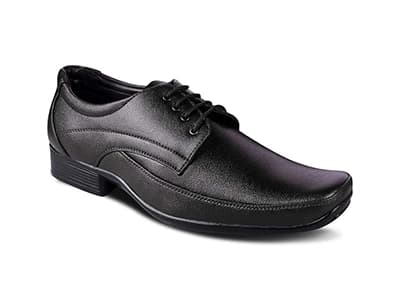
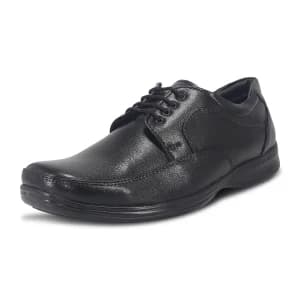
Formal Shoes for Men
Lakhani formal shoes for men are designed for settings where polished dressing is expected, including office routines, meetings, interviews and formal occasions.
Their closed construction and structured shape work naturally with formal trousers, shirts, suits and selected business-casual combinations.
Colour makes a noticeable difference to how a formal shoe fits into the rest of an outfit.
Black is generally the more traditional option and pairs easily with black, charcoal, grey and navy clothing. Brown formal shoes can work particularly well with navy, beige, khaki and selected shades of grey.
If you are deciding between these two common options, the guide on black vs brown formal shoes for men explains where each colour tends to work best.
Choosing Formal Shoes for Office Wear
A pair worn once for an event can be selected differently from footwear that needs to stay on your feet for most of the working day.
For office use, consider:
- overall fit;
- toe space;
- heel stability;
- amount of daily walking;
- dress-code requirements;
- fastening style;
- how easily the colour works with your wardrobe.
A clean, minimally detailed design is often easier to coordinate across multiple outfits.
Traditional workplaces may favour lace-up formal shoes, while some business-casual environments allow a more relaxed slip-on style.
For people who spend long hours at work, our guide on how to choose comfortable formal shoes for long office hours covers the fit and comfort factors worth checking.
You can also read the broader guide on how to choose the best formal shoes for men before comparing different styles.
How Formal Shoes Should Fit
Formal shoes should feel secure without squeezing the foot.
Pay attention to three areas in particular.
Toe Space
The toes should have enough room to sit naturally without pressing against the front of the shoe.
Heel Fit
The heel should remain reasonably secure while walking. Repeated lifting can cause rubbing and make the shoe feel unstable.
Width and Instep
The sides and upper should hold the foot without creating excessive pressure.
Try both shoes and walk in them before deciding. One foot can be slightly larger than the other, and the fit should be judged according to how the pair feels during actual movement.
Types of Formal Shoes for Men
Formal footwear is available in different constructions and styles, and not every design suits the same occasion.
Traditional lace-up shoes generally create a more formal appearance, while certain slip-on designs may work better in business-casual or less traditional settings.
The choice should depend on how formal the occasion is, what clothing you plan to wear and how often the shoes will be used.
For a closer look at the available styles and where they fit into a wardrobe, read the Types of Formal Shoes for Men: A Practical Style Guide.
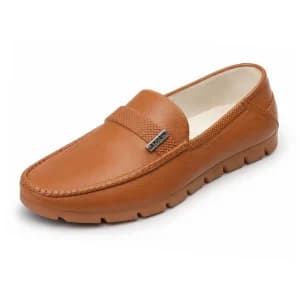
Loafers for Men
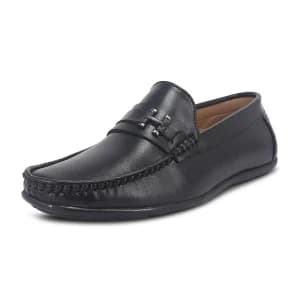
Lakhani loafers combine a structured appearance with the convenience of slip-on footwear.
Because there are no laces to tie, loafers can be quick to wear while still offering a polished look suitable for many office, semi-formal and smart-casual settings.
They work well with:
- formal trousers;
- chinos;
- dark jeans;
- business-casual clothing;
- selected travel outfits.
Depending on the model, Lakhani loafers may include soft suede or textured synthetic uppers, cushioned footbeds, breathable inner linings and flexible TPR soles with driving grip.
Fit is particularly important because a loafer cannot be tightened with laces. The heel should remain secure, while the upper should hold the foot comfortably without excessive pressure.
Loafers vs Formal Lace-Up Shoes
Loafers and lace-up formal shoes can overlap in some professional settings, but they do not always create the same level of formality.
Lace-up shoes are generally the safer option for traditional offices, important meetings and more formal events.
Loafers offer greater convenience and often work well for:
- business-casual offices;
- semi-formal occasions;
- travel;
- relaxed professional dressing;
- smart-casual social events.
If you are unsure which category better suits your routine, read Loafers vs Formal Lace-Up Shoes: Which Should Men Choose?.
Types of Loafers and How to Wear Them
Different loafer styles can create noticeably different looks.
Suede usually feels softer and more casual, while smooth or textured synthetic finishes can appear more structured.
For office wear, black loafers can be paired with charcoal, grey or navy trousers and a tucked-in shirt.
For a more relaxed outfit, brown or neutral loafers work well with chinos and a polo or casual shirt. Dark jeans can also work where the setting allows smart-casual dressing.
For more styling ideas and an explanation of the major variations, see the guide to types of loafers, their uses and how to wear them.
School Shoes for Boys and Girls
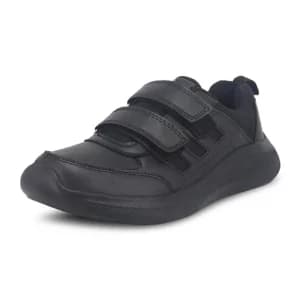
Lakhani school shoes are designed for regular uniform use, classroom routines and active school days.
The black finish suits many common school-uniform requirements, while the practical construction is intended to handle everyday use.
The range includes scuff-resistant PVC or synthetic leather uppers, injection-moulded PVC soles and easy-clean surfaces.
The model shown uses hook-and-loop fastening, commonly referred to as Velcro fastening, allowing children to put on and remove the shoes without tying laces.
The closed-toe construction also provides coverage during regular classroom, corridor and playground movement.
Parents should still check the specific uniform rules of the school before purchasing a particular style.
How to Choose the Right School Shoes
Children may wear their school shoes for several hours almost every weekday, so fit deserves close attention.
Start by measuring both feet while the child is standing.
Choose according to the larger foot and check the shoes with the same type of socks normally worn as part of the school uniform.
Look for:
- enough room for the toes to move naturally;
- a heel that remains reasonably secure;
- no obvious pressure across the sides;
- secure fastening;
- comfortable movement while walking and turning.
Avoid selecting a pair that is excessively large simply to allow for future growth. A shoe that is too loose can be uncomfortable and unstable during normal school activity.
For a complete buying checklist, see How to Choose the Right School Shoes for Children.
Easy-Clean School Shoes for Daily Uniform Use
School footwear naturally picks up dust and surface marks during the day.
Easy-clean materials can make regular maintenance more manageable.
Start by removing loose dirt using a soft cloth or suitable brush. Where appropriate for the material, wipe the upper gently using a slightly damp cloth and mild soap.
Do not store the shoes while they are wet.
Allow them to dry naturally in a well-ventilated area and avoid heaters or strong direct heat.
The sole, upper and fastening should also be checked regularly.
A pair may need replacing when:
- the child has outgrown it;
- the fastening no longer holds securely;
- the outsole is heavily worn;
- the upper or sole shows significant damage.
Ballerina Shoes for Women
Lakhani ballerina shoes, also commonly called belly shoes, offer women a lightweight, flat and closed-toe footwear option.
Their low-profile design and open instep make them easy to pair with a range of everyday clothing.
Depending on the model, the upper may use soft PU or patent leather, while other features can include soft interior lining, anti-slip sheet soles and flex-groove technology.
Ballerinas can be considered for:
- daily routines;
- college;
- travel;
- casual outings;
- selected office environments.
They can work with trousers, jeans, dresses, skirts, leggings and simple ethnic wear.
Ballerina Shoes for Office and Daily Wear
Ballerina flats can be useful in workplaces with relaxed or smart-casual dress codes.
The closed front gives them a neater appearance than many open-footwear styles, while the slip-on construction makes them simple to wear.
For work, ballerinas can be paired with straight trousers, a blouse, a kurta or a simple dress.
Neutral shades are generally easier to coordinate across different outfits, while patterned designs can provide a more decorative look.
For casual use, the same footwear may work with jeans, everyday dresses and simple tops.
Because ballerinas do not use laces or adjustable straps, correct sizing is particularly important. The heel should remain secure and the toes should not feel compressed.
How to Choose Formal & Institutional Footwear
Start with the environment in which the footwear will be used.
For Traditional Office Wear
Choose formal shoes when the dress code calls for a conventional professional appearance.
For Business-Casual Dressing
Consider loafers where lace-free convenience and slightly more relaxed styling are appropriate.
For School Uniforms
Choose school shoes according to the school’s rules, the child’s size and the demands of their normal school day.
For Women’s Daily and Selected Office Wear
Consider ballerina shoes where a lightweight, flat and closed-toe style suits the setting.
Check the Toe Space
The toes should have enough room to sit naturally without pressing against the front of the footwear.
Too much empty space can also make the shoe unstable.
Review the Width
Shoe length is only one part of fit.
The sides should hold the foot comfortably without pinching or excessive pressure.
Check the Heel
The heel should remain reasonably secure in formal shoes, loafers, school shoes and ballerinas.
Repeated slipping can make the footwear uncomfortable during extended use.
Consider the Fastening
Different fastening styles offer different levels of adjustment.
Laces allow the fit to be tightened or loosened.
Hook-and-loop straps are convenient for children and can make school shoes easier to wear independently.
Slip-on styles such as loafers and ballerinas depend much more heavily on getting the initial fit right.
Match the Footwear to the Dress Code
The same shoe will not be appropriate in every environment.
Traditional corporate offices may favour formal lace-up shoes.
Business-casual workplaces may allow loafers.
Some offices may permit ballerina flats for women.
Schools can have precise rules covering colour, design and fastening.
When in doubt, check the dress-code requirement first and then choose within the appropriate footwear category.
Cleaning & Maintenance
Regular care helps footwear stay presentable and gives you an opportunity to spot excessive wear.
Begin by removing loose dust with a soft cloth or suitable brush.
The correct cleaning method depends on the upper material.
Synthetic and PVC surfaces can generally be wiped carefully with a slightly damp cloth where suitable.
Suede should be handled with an appropriate soft brush rather than soaked.
Patent-style surfaces need gentle cleaning to reduce the chance of scratching.
Clean the outsole separately and remove dirt caught in tread patterns or grooves.
Allow damp footwear to dry naturally in a ventilated area.
Avoid:
- open flames;
- heaters;
- prolonged strong heat;
- storing footwear while it is still damp.
Check soles, laces, straps and other fastening points periodically for damage or excessive wear.
Explore Lakhani Formal & Institutional Footwear
Whether you are choosing shoes for work, school or polished everyday dressing, start with the setting and the wearer.
Explore:
- formal shoes for office and occasion wear;
- loafers for professional and smart-casual styling;
- school shoes for regular uniform routines;
- ballerina shoes for women’s lightweight everyday footwear.
You can also explore the complete Lakhani footwear range if you want to compare these styles with casual, outdoor and open-footwear categories.
Helpful Formal & Institutional Footwear Guides
For more detailed buying and styling advice, explore:
- How to Choose the Best Formal Shoes for Men
- How to Choose Comfortable Formal Shoes for Long Office Hours
- Black vs Brown Formal Shoes for Men: Which Works Better?
- Types of Formal Shoes for Men: A Practical Style Guide
- Loafers vs Formal Lace-Up Shoes: Which Should Men Choose?
- Types of Loafers: Styles, Uses and How to Wear Them
- How to Choose the Right School Shoes for Children
Frequently Asked Questions
What footwear is included in Lakhani’s Formal & Institutional category?
The category includes formal shoes for men, loafers, school shoes for boys and girls, and ballerina shoes for women.
Which shoes are best suited to traditional office wear?
Formal shoes are generally the most appropriate option where a traditional professional dress code is expected.
Can loafers be worn to the office?
Yes, loafers can suit many offices, particularly workplaces with business-casual or slightly relaxed professional dress codes. More traditional settings may still prefer lace-up formal shoes.
Are black or brown formal shoes more versatile?
Black shoes generally work well in more traditional formal settings. Brown can work particularly well with navy, beige, khaki and business-casual outfits. The best choice depends on your wardrobe and dress code.
How should formal shoes fit?
The toes should have comfortable space, the heel should remain reasonably secure and the sides should not place excessive pressure on the foot.
Are Lakhani school shoes suitable for boys and girls?
Yes. The available black school shoes can be considered for boys and girls, subject to school uniform rules, product sizing and availability.
What type of fastening do Lakhani school shoes use?
The model shown uses hook-and-loop fastening, commonly called Velcro fastening.
How often should children’s school-shoe fit be checked?
Children’s feet can change during the school year, so the fit should be reviewed periodically rather than assuming one size will remain suitable throughout the year.
Are loafers formal or casual shoes?
Loafers can work across professional, semi-formal and smart-casual settings. Their suitability depends on the design, colour, upper finish and dress code.
What are ballerina shoes?
Ballerinas, also called belly shoes, are flat, closed-toe slip-on shoes for women with a low-profile shape and open instep.
Can ballerina shoes be worn to the office?
They may suit workplaces with relaxed or smart-casual dress codes. More formal professional environments may require a different footwear style.
How should formal and institutional footwear be cleaned?
Use a cleaning method suited to the upper material, remove surface dirt regularly and allow damp footwear to dry naturally away from strong direct heat.