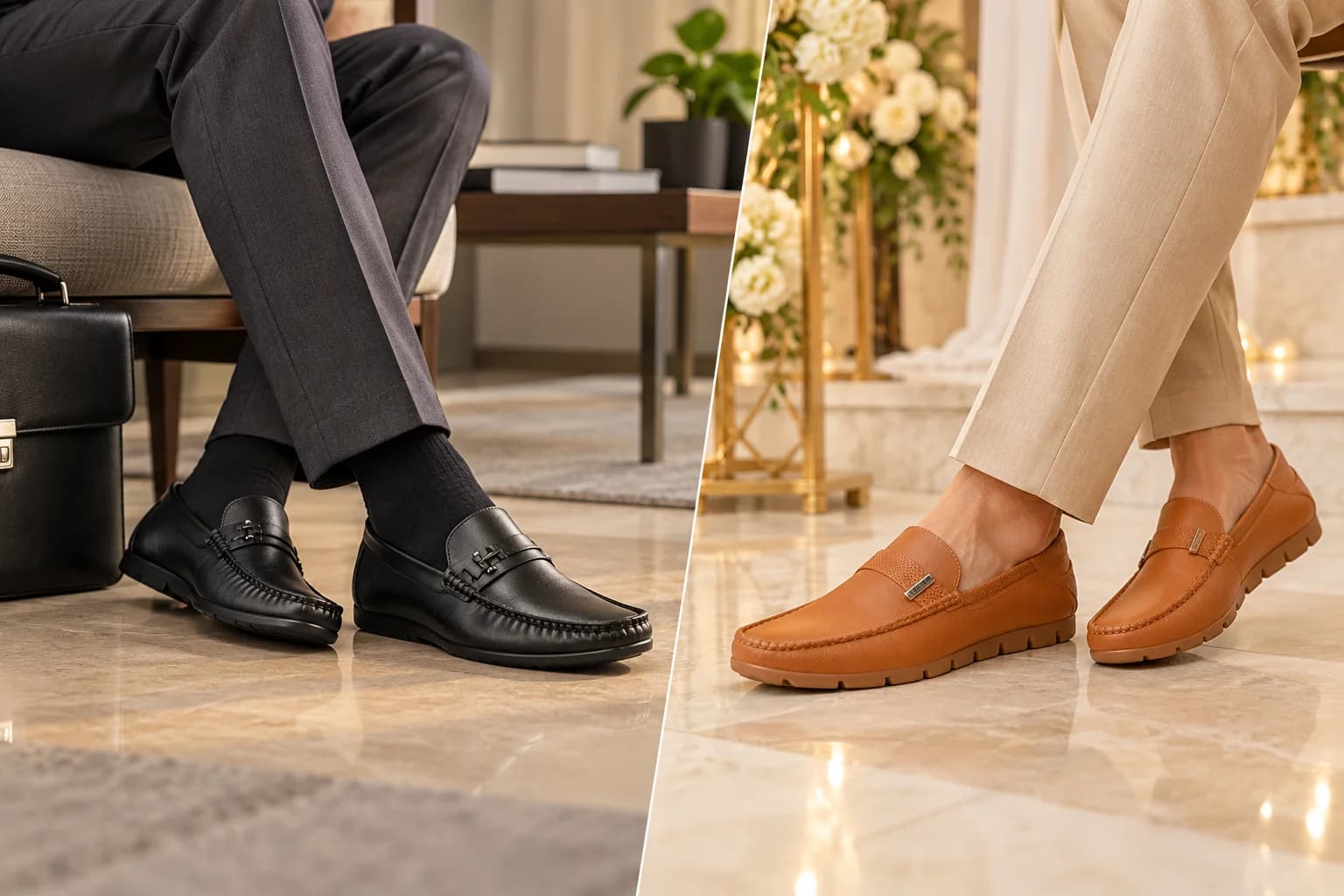
Formal Shoes for Interviews, Weddings and Business Meetings
A polished pair of formal shoes can work across several occasions, but the most suitable choice changes with the setting. Job interviews usually reward restraint. Weddings permit more personality. Business meetings call for a balance between authority, practicality and the organisation’s dress culture.
The goal is not to own a different pair for every invitation. It is to understand how colour, shape, finish and fastening affect the message an outfit sends. Once those elements are clear, one versatile pair may cover several situations while another fills a genuine wardrobe gap.
Why Should Your Formal Shoes Change with the Occasion?
Every occasion has its own level of formality and visual emphasis. In an interview, footwear should support a professional first impression without becoming the main subject. At a wedding, shoes are part of a celebratory outfit and may coordinate with richer colours or traditional clothing. During a business meeting, they should remain appropriate through travel, standing and extended wear.
Condition matters in every setting. Clean uppers, tidy laces, intact heel edges and well-kept soles communicate care more reliably than decorative details. A modest shoe in excellent condition usually looks more appropriate than an elaborate pair that is dusty or visibly worn.
What Formal Shoes Should You Wear for a Job Interview?
For most corporate interviews, a simple lace-up formal shoe is the safest option. A clean toe shape, restrained finish and minimal decoration keep attention on the conversation. Black is especially dependable for conservative workplaces. Dark brown can work well where the dress code is business formal or business casual rather than strictly traditional.
Comfort deserves advance attention. Interview days can involve commuting, waiting, walking between buildings and standing during introductions. Wear the pair before the interview day to confirm the fit, but avoid using visibly worn shoes merely because they feel familiar.
Shoe colours that work with common interview outfits
| Outfit | Dependable shoe colour | Notes |
|---|---|---|
| Navy suit | Black or dark brown | Black appears more conservative; brown adds contrast |
| Charcoal suit | Black | Creates a traditional, cohesive combination |
| Mid-grey trousers | Black or dark brown | Match the belt closely to the shoe family |
| Beige or tan trousers | Medium or dark brown | Usually looks more balanced than black |
| White shirt with dark trousers | Black or dark brown | Let trouser colour determine the final choice |
If uncertain about workplace expectations, choose the quieter combination. The existing guide to black vs brown formal shoes provides a more detailed colour comparison.
Interview mistakes to avoid
- Wearing a new pair for the first time on interview day.
- Choosing a highly reflective or heavily decorated style for a conservative role.
- Ignoring scuffed toes, dusty welts or untidy laces.
- Allowing the trouser hem to bunch heavily over the shoe.
- Combining black shoes with a noticeably different brown belt.
- Selecting a narrow shape that becomes uncomfortable during travel.
Which Formal Shoes Work Best for Weddings and Receptions?
Weddings allow more freedom because the shoes are part of an occasion-led outfit. With a dark Western suit, polished black or deep brown lace-ups create a classic result. A textured or subtly detailed shoe can add interest when the clothing itself is simple.
Traditional and Indo-Western outfits require attention to proportion and colour. A streamlined formal shoe may work with a bandhgala or tailored fusion outfit, while some traditional garments may call for a different footwear category altogether. Avoid forcing an office shoe into an outfit when its shape clearly conflicts with the clothing.
Reception footwear also needs to survive several hours of standing and movement. Confirm toe room, heel hold and flex before prioritising surface shine. If the venue includes lawns or uneven paving, inspect the sole and heel rather than choosing only by appearance.
What Shoes Are Appropriate for Client Meetings and Corporate Events?
Client-facing footwear should align with the industry and the level of the meeting. Traditional finance, legal and senior-management settings often favour black or dark-brown lace-ups with restrained detailing. Creative, technology and less formal workplaces may accept loafers or simpler business-casual designs.
Travel can change the decision. A pair used for an airport journey, a site visit and a presentation needs more adaptability than one worn only from a car to a boardroom. Select a secure fit and a sole appropriate for the route. Keep a small cloth available to remove travel dust before the meeting.
Loafers can be appropriate when the organisation’s dress expectations allow them. The comparison of loafers and formal lace-up shoes can help clarify the tradeoff.
Interview vs Wedding vs Business Meeting
| Decision | Interview | Wedding or reception | Business meeting |
|---|---|---|---|
| Main objective | Professional restraint | Coordination and celebration | Credibility and practical comfort |
| Safest colour | Black | Black or brown, depending on outfit | Black or dark brown |
| Surface finish | Clean and understated | Polished; some texture is acceptable | Neat and restrained |
| Decoration | Minimal | Moderate, if it suits the outfit | Minimal to moderate |
| Fastening | Lace-up is a dependable choice | Lace-up or suitable slip-on | Lace-up; loafers where accepted |
| Comfort priority | Commute and waiting time | Standing and movement | Travel and extended wear |
How to Match Shoes with Suits, Trousers and Traditional Outfits
Start with the trousers, because they meet the shoe visually. Black shoes pair naturally with charcoal, black and many navy outfits. Brown offers a broad range of combinations with navy, blue, beige and some grey tones. The darker and more conservative the event, the safer a darker shoe usually becomes.
Match the belt to the general shoe colour rather than chasing an impossible exact shade. Socks should create a smooth visual transition from trousers to shoes; matching them to the trousers is often more reliable than matching them to the footwear.
With traditional clothing, consider silhouette before colour. Narrow trousers and tailored jackets may work with streamlined formal shoes. Wider or distinctly traditional garments may be better served by footwear designed for that look.
The types of formal shoes for men guide explains the principal style families, while the Lakhani formal shoes collection lets readers explore available designs.
Can One Pair Cover All Three Occasions?
A well-kept black or dark-brown lace-up with minimal detailing can cover many interviews, office meetings and weddings. Black is the more conservative all-rounder. Dark brown may offer greater versatility with lighter suits and smart-casual trousers.
However, versatility should not override fit or the event’s demands. If frequent weddings require a more expressive style, or daily meetings involve extensive walking, a second pair may solve a real need rather than duplicate the first.
Frequently Asked Questions
Can brown shoes be worn to interviews?
Yes, particularly with navy, blue, beige or suitable grey outfits in workplaces that are not strictly conservative. Choose a dark, well-maintained pair when uncertain.
Are loafers appropriate for business meetings?
They can be in business-casual and many contemporary offices. For highly conservative settings, lace-up formal shoes remain the safer choice.
Can the same shoes work for a wedding and office?
Yes. A simple black or dark-brown formal shoe can work for both when it suits the clothing and remains comfortable and well maintained.
Editorial handoff
- Publishing status: Unpublished draft.
- Verification: Product SME should confirm category alignment before product examples are added.
- Suggested hero image: Three formal outfits representing an interview, wedding and client meeting.