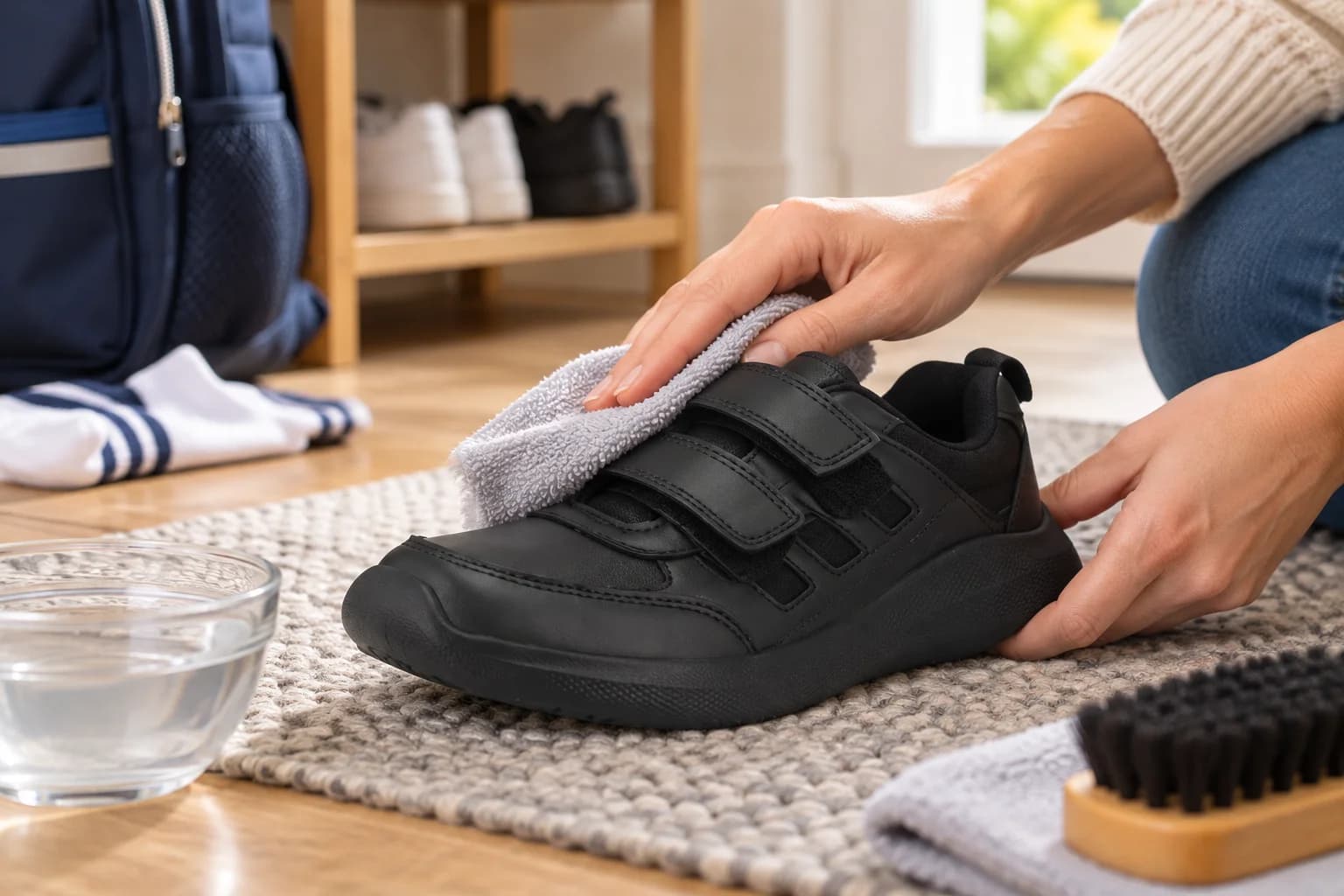
How to Clean Black School Shoes Without Damaging Them
Black school shoes face dust, playground dirt, spilled food, rain and repeated scuffing. Regular care keeps them presentable and also gives parents an opportunity to inspect the sole, fastening and fit. Cleaning them aggressively, however, can damage a synthetic or PVC surface, weaken adhesives or leave the interior damp for the next school day.
The safest method depends on the shoe’s material and care instructions. A smooth black upper may be genuine leather, coated synthetic material, PVC or a combination. Similar-looking surfaces should not automatically receive the same polish or cleaner.
Why Do Black School Shoes Need Regular Cleaning?
Dry dirt collects around seams, creases, fastening points and the line between the upper and sole. If it remains there, it can become harder to remove and may be rubbed across the surface during later polishing. Mud and moisture can also hide early signs of separation or wear.
A short routine is more practical than occasional heavy washing. Removing dust after school and addressing marks promptly reduces the need for soaking or vigorous scrubbing. Regular inspection can reveal:
- Loose or damaged laces and hook-and-loop straps.
- Worn or uneven outsole areas.
- Separation between the upper and sole.
- Torn lining or exposed internal edges.
- A toe area that is becoming tight as the child grows.
- Dampness or persistent odour inside the shoe.
Cleaning is therefore part of routine shoe care, not merely a cosmetic task.
What Should You Check Before Cleaning School Shoes?
Read the care label, product page or packaging first. Identify the upper material and note whether the manufacturer allows water, polish or any particular cleaning product. If the material cannot be confirmed, begin with the gentlest method: dry dust removal followed by a patch test using a well-wrung cloth.
Inspect the shoe for existing peeling, cracks, loose bonding or open seams. Water can enter through damaged areas. A separating sole should not be “cleaned back into place”; it needs appropriate repair or replacement assessment.
Remove laces and removable insoles only when they are designed to come out. Do not pull at a glued insole. Gather two soft cloths, a soft brush, room-temperature water and a separate brush or cloth for the sole. Use mild soap only if the product’s instructions permit it.
How to Clean Black School Shoes Step by Step
Remove surface dirt
Allow wet mud to dry enough that it can be lifted without spreading. Tap the soles gently outdoors, then use a soft dry brush or cloth on the upper. Work around seams, the tongue, eyelets or strap edges and the upper–sole junction.
Do not begin with a wet cloth over loose grit. Water can turn dust into a film, and rubbing grit may mark a smooth finish.
Clean synthetic uppers safely
Dampen a soft cloth with plain water and wring it thoroughly. Test a hidden area first. If no colour or finish changes, wipe the upper gently in small sections.
For marks that plain water does not remove, use a very dilute mild-soap solution only if the care instructions allow it. Apply the solution to the cloth rather than pouring it onto the shoe. Wipe away any residue using another cloth dampened with clean water.
Avoid hard circular scrubbing. Repeated friction can alter the shine of a coated surface or weaken an ageing finish. The more detailed guide to cleaning black synthetic leather shoes provides additional material precautions.
Clean the sole and edges
Use a separate cloth or soft brush for the sole so that grit is not transferred back to the upper. Support the shoe in one hand and clean the sidewall and tread where accessible. Do not force sharp tools into tread grooves or pull at material caught near a bonded edge.
Use minimal water around the upper–sole joint. A visually solid sole unit can still contain adhesives or foam affected by prolonged soaking.
Dry shoes correctly
Blot the surface with a clean dry cloth. Loosen the laces or open the straps and pull the tongue forward to improve airflow. If the inside is damp, insert plain absorbent paper loosely and replace it as needed.
Dry the pair in a shaded, ventilated place at room temperature. Keep it away from direct sunlight, heaters and hair dryers. High heat can distort synthetic components and affect adhesives. Do not store or wear the shoes until the interior is dry.
How to Remove Common Scuff Marks from Black School Shoes
A scuff may be material transferred onto the surface, while a scratch cuts into the finish. Start with a dry cloth, followed by a lightly damp cloth. Use gentle strokes rather than concentrated pressure.
If the mark remains, use only a product labelled for the confirmed upper material. Test it in a hidden area. A black colour product may disguise a superficial mark, but it cannot rebuild a scratched, cracked or peeling coating.
Avoid household “hacks” involving toothpaste, nail-polish remover, strong alcohol or abrasive pads. A mark may appear to disappear because the surrounding finish has been removed as well.
How to Clean School Shoes Without Damaging PVC or Synthetic Materials
PVC and other synthetic materials are manufactured surfaces. They do not absorb conditioner in the same way as unfinished natural leather. Oils, waxes or solvents intended for genuine leather may remain on top, create uneven shine or affect the coating.
Use low moisture and minimal product. Never assume that “waterproof-looking” means the complete shoe can be soaked. Water can enter through the tongue, collar and seams and remain inside the lining.
Flexing also matters. Avoid bending the shoe sharply while cleaning the toe. A surface already weakened by repeated wear may crack when folded. Hold the shoe in its natural shape and support the area being wiped.
Which Cleaning Mistakes Should Parents Avoid?
- Putting school shoes in a washing machine without explicit permission.
- Soaking them in a bucket or under a running tap.
- Using bleach, acetone, strong disinfectant or multipurpose cleaner.
- Applying genuine-leather polish to an unverified synthetic upper.
- Scrubbing with a hard brush or rough kitchen pad.
- Drying beside a heater or in intense sun.
- Sending a child to school in shoes that remain damp inside.
- Using glue at home on a separating structural area without assessing the damage.
- Cleaning over deep cracks instead of considering replacement.
How to Keep School Shoes Looking Neat Throughout the Week
Daily routine
After school, remove loose dust and open the shoes to air. Do not leave damp socks inside. Place the pair where it will not be crushed by bags or other footwear.
Midweek check
Inspect straps, laces, tread and heel wear. Wipe light marks before they become embedded. Check whether the child reports rubbing or tightness.
Weekend care
Perform damp cleaning only if needed, allowing enough time for complete drying before Monday. Clean laces separately according to their material. Confirm that the shoes still sit level and that the sole remains securely attached.
Rotation and storage
If the school permits and the family uses more than one pair, rotation provides extra drying time. Store clean, dry shoes in a ventilated place away from damp walls and direct sun.
Parents choosing a replacement can explore the Lakhani school shoes category and consult How to Choose the Right School Shoes for Children. Verify the individual product material before following any cleaning method.
When Is Cleaning No Longer Enough?
Replace or professionally assess the shoes if the outsole is worn smooth, the sole separates, the upper has a large crack, the lining exposes rough edges or the shoe no longer fits. Persistent dampness or odour after correct cleaning and drying may also indicate that internal materials are no longer recovering adequately.
Children’s feet grow, so a clean-looking pair can still be too small. Ask about toe pressure, rubbing and discomfort rather than relying only on appearance.
Frequently Asked Questions
Can black school shoes be washed with detergent?
Avoid soaking them. If the manufacturer permits mild soap, use a very dilute amount on a well-wrung cloth and remove residue carefully.
Can you use polish on synthetic school shoes?
Only use a product specifically stated as compatible with the confirmed synthetic material. Conventional leather polish may not be suitable.
How do you dry school shoes overnight?
Blot moisture, open the fastening, use loose absorbent paper and place the shoes in moving air at room temperature. Do not use direct heat. Severely soaked shoes may not dry safely overnight.
Editorial handoff
- Publishing status: Unpublished draft.
- Verification: Product and materials reviewers must approve all cleaning guidance.
- Suggested hero image: Parent cleaning one black school shoe with a soft cloth while the second shoe airs nearby.