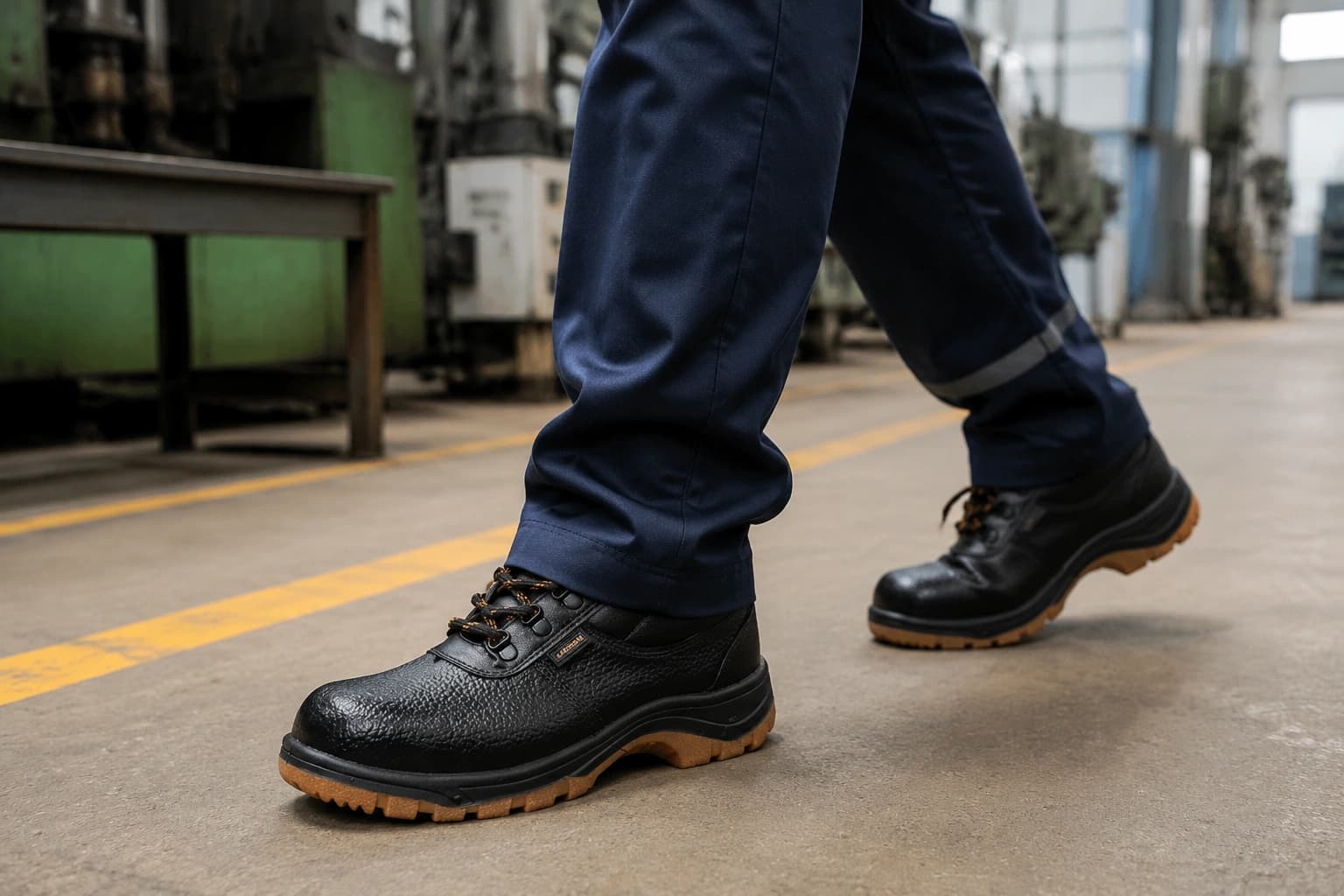
Safety Shoes for Industrial Workers: Features, Uses and Selection Guide
Introduction
Safety shoes for industrial workers should be selected through a workplace risk assessment, not by appearance or a general claim of toughness. Falling objects, sharp debris, static accumulation, oils and uneven surfaces can require different protection categories. Lakhani safety shoes are described with steel toe protection, a double-density PU sole and selected industrial features, but employers must confirm that the exact model matches the hazards and standards applicable to the job.
Begin With the Workplace Hazard Assessment
Factories, warehouses, workshops, construction sites and fabrication units do not share identical risks. Identify impact, compression, penetration, slip, chemical, heat and electrical exposures before comparing footwear. Safety teams should use applicable regulations, employer policies and certified specifications. The Performance and Outdoor collection includes rugged options, but hiking boots and sports shoes must never be treated as substitutes for required industrial safety footwear.
Key Safety-Shoe Features to Review
Toe protection: A protective cap reinforces the front of the shoe where falling materials or tools may create impact risk. The Lakhani model states 200-joule steel toe protection; buyers should verify certification and job suitability. Compare this feature with the expected duration, surface and pace of the routine. A useful specification should solve a real wear requirement and remain understandable to the buyer. Note where the footwear will spend most of its time and whether conditions change between the beginning and end of the day.
Anti-penetration construction: A penetration-resistant layer is relevant where nails, sharp metal or debris may be present underfoot. Protection level and test standard must be confirmed for the exact footwear model. Test the feature in motion whenever a product trial is available. A photograph or quick hand test cannot show how the complete shoe will feel during repeated steps. Pay attention to small changes in pressure, stability and foot position instead of judging comfort from softness alone.
Anti-static properties: Anti-static footwear is designed to reduce static accumulation under appropriate conditions. It is not automatically electrically insulating footwear, and electrical work may require a different category. Material, fit and construction should work together. One impressive component cannot correct a shoe that is unstable, poorly sized or unsuitable for the intended environment. Compare the complete pair across realistic movements and avoid isolating one technical term from the rest of the design.
Upper resistance: The stated upper properties should be compared with oils, acids or other substances present in the workplace. Resistance is material- and test-specific; it does not mean unlimited chemical protection. Assess the feature against the most demanding regular use rather than an occasional ideal scenario. This keeps the decision practical and reduces reliance on unnecessary extras. If the activity involves a specialised hazard or sport, confirm whether general footwear is truly appropriate before proceeding.
Sole grip and stability: A double-density PU sole can combine a supportive base with walking comfort for long shifts. Tread must still be inspected and kept clear of contaminants that reduce surface contact. Review the current product specification and compare it with personal or workplace requirements. Performance can vary by model, size, surface, maintenance and the way footwear is used. Recheck the feature after fitting because a specification cannot compensate for a pair that moves incorrectly on the foot.
Choosing for Different Uses
Manufacturing and fabrication: Assess risks from components, tools, metal offcuts, oils and repeated standing before defining the required footwear specification. Plan around frequency, duration and the surfaces encountered. The right pair should remain appropriate through the normal routine rather than only during a brief try-on. Comfort and hold should stay predictable as the wearer becomes more active.
Warehouse operations: Consider pallet movement, dropped goods, floor contamination and the distance workers walk during a shift. Think through the whole day, including commuting, standing and changes between indoor and outdoor areas. Mixed environments can alter which features deserve priority. Clothing requirements may also influence the final balance of function and appearance.
Construction and maintenance: Review impact, penetration, uneven terrain and task-specific electrical or chemical exposure with the responsible safety professional. When one pair must serve several situations, choose for the primary use first and confirm that the secondary uses do not demand a different category of footwear. This avoids expecting a casual design to perform a specialist job.
Fit and Comfort During Long Shifts
The toes must not touch the protective cap while standing or walking because a rigid cap will not stretch like a soft upper. Check heel security, width and instep pressure while wearing normal work socks. Walk, turn and use steps where safe. A poorly fitted safety shoe can distract the worker, create rubbing and discourage consistent use, while an oversized pair can reduce stability.
Try both feet while standing and walk on a clean surface before deciding. One foot may be slightly larger than the other, and sock thickness can change the feel of the same size. The toes should have natural room, the heel should remain reasonably secure and the upper should not create sharp pressure. Avoid buying an uncomfortable pair on the assumption that every material will stretch substantially with wear.
Common Buying Mistakes to Avoid
Buying without a hazard assessment: A steel toe alone may not address penetration, static, chemical, heat or electrical risks.
Confusing anti-static with electrical insulation: These are different properties and must not be treated as interchangeable.
Ignoring damage after impact: A shoe should be inspected after a serious strike even when external damage appears limited.
Using heavily worn footwear: Sole separation, punctures, smooth tread and damaged uppers can compromise safety and stability.
Care and Maintenance
Create a routine inspection process covering the toe area, upper, outsole, sole bond, stitching and interior. Remove oil, chemical residue and embedded debris according to workplace procedures and material guidance. Allow wet footwear to dry away from strong heat. Record replacement triggers and make it easy for workers to report damage rather than continuing to wear questionable footwear.
Remove loose dust and surface debris after use, then follow a cleaning method suitable for the upper and sole material. Allow damp footwear to dry naturally in a ventilated place. Strong direct heat, open flames and aggressive chemicals can affect shape, finish or bonding. Inspect soles, straps, laces and fastenings regularly, and replace footwear when wear begins to affect fit, grip, protection or stability.
Explore Relevant Lakhani Footwear
Review the stated specifications of Lakhani steel toe safety shoes and discuss bulk or institutional requirements through the contact page. Lakhani’s manufacturing facility provides context on the company’s production capabilities. Final selection should remain tied to verified standards and the employer’s risk assessment.
Conclusion
Selecting safety shoes for industrial workers is a safety decision with comfort implications. Define hazards first, verify standards and model specifications, then check fit across realistic work movements. Inspect footwear regularly and replace damaged pairs promptly. No single safety shoe is suitable for every industrial environment or exposure.
Frequently Asked Questions
Q1. Are steel toe shoes suitable for every factory?
No. The required footwear depends on the documented hazards, applicable standards and employer policy. Additional or different protection may be necessary.
Q2. Do anti-static shoes protect against electric shock?
Not automatically. Anti-static and electrically insulating footwear serve different purposes; consult the relevant safety standard and a qualified professional.
Q3. Should toes touch the steel cap?
No. The toe area should provide adequate room during standing and walking without the foot sliding excessively inside the shoe.
Q4. When should safety shoes be replaced?
Replace them after significant damage or when there is puncture, sole separation, severe tread wear, failed fastening or concern about protective integrity.
Q5. Can hiking boots replace safety shoes?
No. Rugged appearance does not prove compliance with industrial safety requirements such as certified impact or penetration protection.