Sports Shoes Price in India: What Affects the Cost of a Pair?
Sports shoes that look similar in photographs can carry very different prices. That difference is not explained by one feature. Upper material, sole construction, cushioning, manufacturing method, finishing, intended activity, testing and distribution can all contribute to the final cost.
A higher price does not automatically make a shoe right for every buyer. A well-chosen everyday walking shoe may deliver better value than a more expensive pair designed for an activity the wearer never performs. The useful question is not simply “How much does it cost?” but “What am I receiving for this price, and does it match my routine?”
This guide explains how to compare sports shoes in India without relying on temporary offers or invented price bands.
What Factors Determine the Price of Sports Shoes in India?
The price of a sports shoe can reflect several overlapping decisions:
- The type, weight and construction of the upper.
- The materials and number of layers in the sole.
- The amount and placement of cushioning.
- Reinforcement around the heel, toe and lacing area.
- The complexity of cutting, stitching, moulding and assembly.
- Quality-control requirements and consistency.
- Design development, sampling and tooling.
- Packaging, logistics, taxes and retail distribution.
- Brand positioning, marketing and after-sales support.
Not every feature is visible. Two shoes may share the same colour and silhouette while differing in lining, foam density, reinforcement, outsole compound or attachment method. Product descriptions therefore deserve more attention than appearance alone.
How Do Upper Materials Affect Sports Shoe Prices?
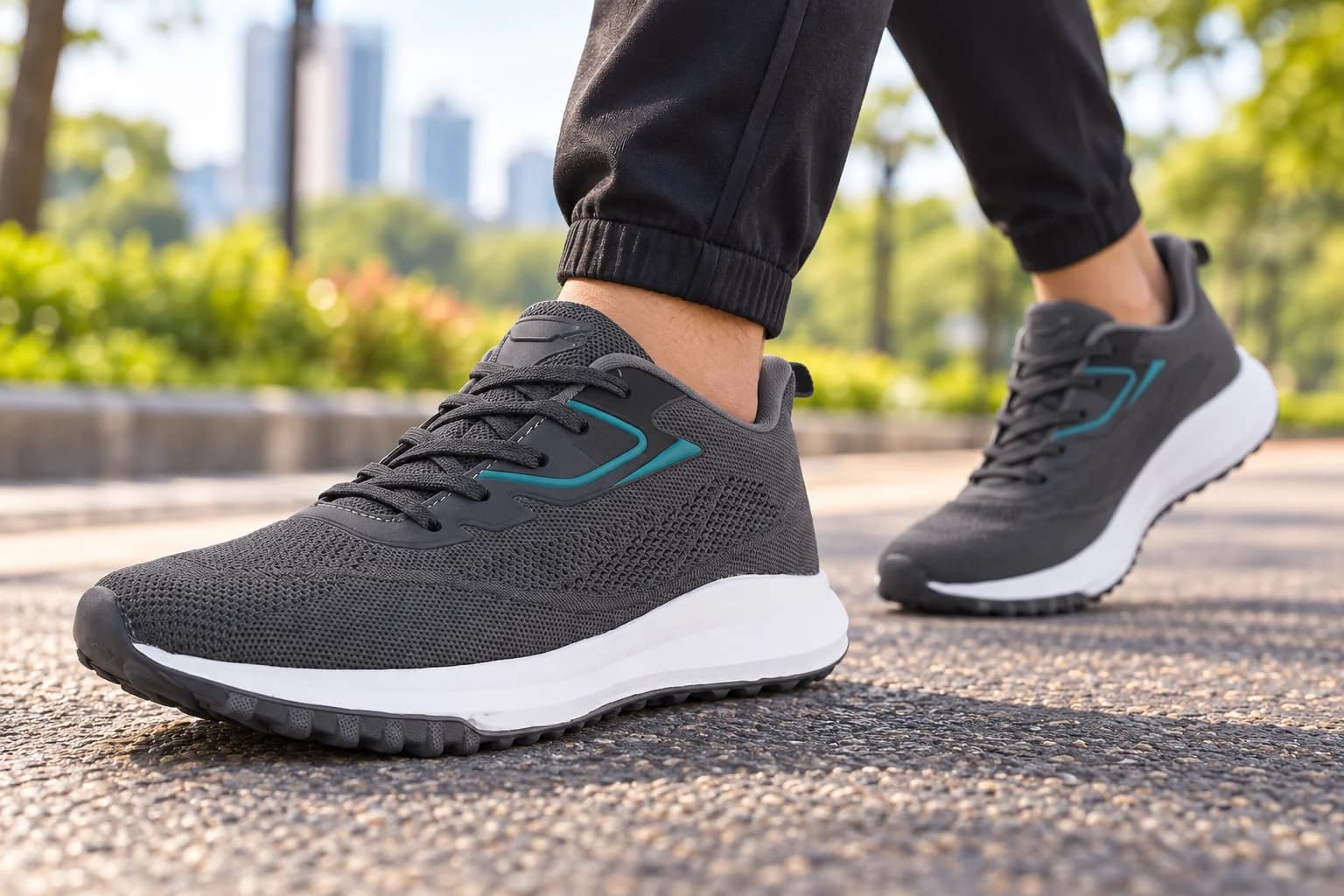
The upper holds the foot and influences ventilation, flexibility, structure and maintenance. A simple single-layer upper may cost less to produce than one combining engineered mesh, overlays, padding and shaped reinforcement.
Mesh can reduce weight and allow airflow, but mesh quality, weave density and reinforcement vary. Knitted uppers may require specialised manufacturing and can create a sock-like fit, although not every knit provides the same support. Synthetic panels can add shape, abrasion resistance or easier surface cleaning, depending on their formulation.
More panels do not automatically mean better performance. Every seam and overlay should have a purpose. The forthcoming guide to mesh, knitted and synthetic sports-shoe uppers explains these trade-offs in detail.
What Role Do Sole Materials and Cushioning Play in Cost?
The sole may contain an insole, midsole and outsole, although construction varies. Each part performs a different job. The insole provides the immediate underfoot surface. The midsole can influence cushioning and stability. The outsole meets the ground and affects wear and traction.
Different foam and rubber-like compounds vary in weight, resilience, grip and manufacturing complexity. A shoe may use one moulded unit or combine several materials in selected zones. Additional components can increase production steps, but their value depends on whether they improve the shoe for its intended activity.
More cushioning is not automatically better. A very soft platform may feel comfortable during a short try-on yet provide less stability than a firmer construction for some routines. Buyers should assess balance, flex and ground contact rather than comparing thickness alone.
Why Do Two Similar-Looking Sports Shoes Have Different Prices?
Online images show colour and general shape but reveal little about internal construction. Differences may include:
- Upper backing and reinforcement: One shoe may have additional structure around high-stress areas.
- Lining and collar padding: Internal materials affect comfort and finishing.
- Sole formulation: Similar-looking soles may use different compounds or densities.
- Attachment method: Stitching, bonding and moulding processes vary.
- Consistency and inspection: Tighter manufacturing controls can add cost.
- Intended use: A shoe designed for repeated activity may require different construction from a casual sport-inspired shoe.
- Distribution: Retail channel, packaging and logistics affect the displayed price.
Price differences should prompt questions, not assumptions. A seller should provide enough information to compare material, fit, intended use and care.
Budget vs Mid-Range vs Premium Sports Shoes: What Should You Compare?
These labels are relative and change across brands and sales channels, so this table avoids fixed rupee bands.
| Comparison area | Budget-focused pair | Mid-range pair | Premium-positioned pair |
|---|---|---|---|
| Best use | Straightforward everyday needs | Regular activity and broader feature balance | Specialised use or refined construction |
| Upper | Often simpler construction | May combine ventilation and reinforcement | May use engineered or activity-led structures |
| Sole | Usually uncomplicated | May use zoned cushioning or separate outsole areas | May use specialised compounds or multi-part systems |
| Fit details | Basic collar and lining | More shaped padding or support features | More developed fit and finishing, depending on model |
| Design choice | Practical colours and forms | Wider selection | Technical or fashion-led positioning |
| What to verify | Fit and basic suitability | Whether extra features match your routine | Whether specialised features justify the premium |
These are tendencies, not guarantees. A price tier is not a quality certificate. Compare the actual pair and verify claims in its product information.
How to Assess Value Instead of Buying Based on Price Alone
Begin with the primary activity. A person walking thirty minutes on paved roads needs a different balance from someone training indoors or wearing the pair throughout a standing workday.
Next, consider frequency. A shoe used five days a week should be assessed for fit, internal comfort, construction and maintenance—not just its purchase price. A useful value calculation is cost per comfortable wear. A cheaper pair that remains unused because it rubs is poor value; an expensive pair with irrelevant features may be equally wasteful.
Inspect likely wear points: outsole edges, toe flex area, heel lining and lace eyelets. Check whether the shoe bends near the forefoot and whether the heel remains secure. Read return and size guidance before buying.
What Should You Check Before Buying Sports Shoes Online?
- Confirm the stated activity and do not rely only on the word “sports”.
- Check upper, sole and lining materials where disclosed.
- Compare foot measurements with the current size guide.
- Review photographs from above, below and both sides.
- Inspect the fastening and heel structure.
- Check care instructions and whether components are removable.
- Read current delivery, exchange and return terms.
- Compare the regular listed price rather than focusing only on a discount percentage.
- Recheck the live price and availability immediately before purchase.
How Discounts Can Distort a Price Comparison
A large discount percentage can attract attention, but it does not explain whether a shoe suits the buyer. Compare the current selling price, specifications and return conditions rather than using the crossed-out price as the main measure of value. Confirm that both pairs being compared serve a similar purpose; a casual sport-style shoe and an activity-led walking shoe are not direct substitutes merely because their prices are close.
Availability also matters. An unusually low price may apply only to one colour or limited sizes. Delivery charges, exchange conditions and the cost of returning an unsuitable size can change the practical total. Save or review the product information at the time of purchase, because online prices and offers can change.
Explore the Lakhani sports shoes category to review the current range. Prices and availability can change, so product-specific figures should always be verified on the live page.
Frequently Asked Questions
Are expensive sports shoes always better?
No. A higher price may reflect materials, construction, specialisation or brand positioning, but the shoe must still fit correctly and suit the intended activity.
Which features matter for daily walking?
Prioritise secure fit, adequate toe room, comfortable cushioning, appropriate flexibility and an outsole suited to the walking surface.
What affects sports shoe durability?
Material quality, construction, fit, activity, surface, wearer movement, rotation, cleaning and drying all influence useful life.
Editorial handoff
- Publishing status: Unpublished draft.
- Price control: Add product links only after verifying the live price and URL on publication day.
- Suggested hero image: Exploded sports-shoe view showing upper, cushioning and outsole.