Steel Toe vs Composite Toe Safety Shoes: What Is the Difference?
Introduction
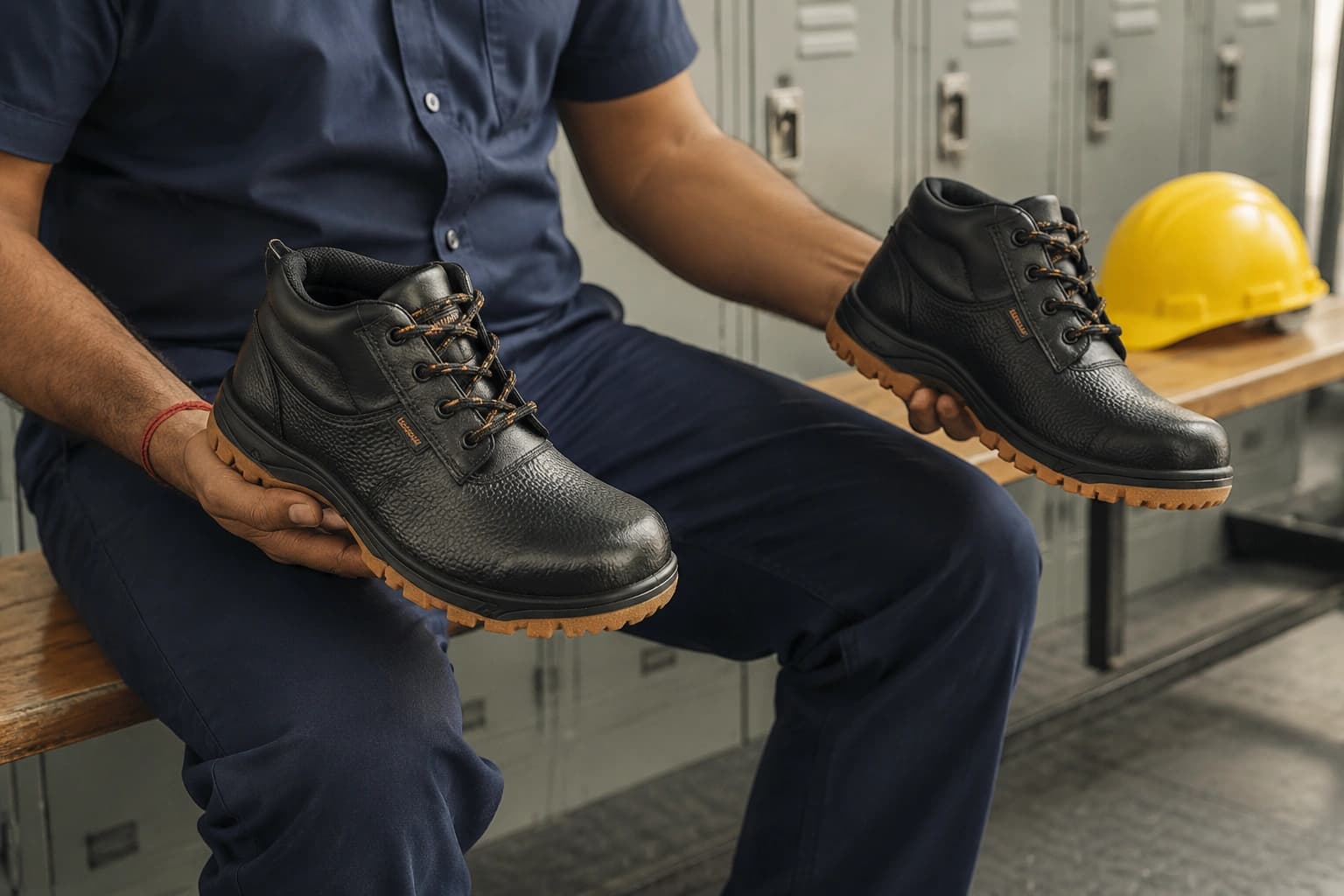
The steel toe vs composite toe shoes comparison is not about declaring one material universally better. Both types can provide protective toe coverage when the finished footwear is tested and certified to the required standard. The correct option depends on workplace hazards, weight preference, temperature conditions, security procedures and employer rules. Lakhani’s current safety shoes are described with a steel toe cap, providing a relevant example of one established construction.
What the Toe Cap Is Designed to Do
A safety toe cap forms a rigid protective space around the front of the foot. Its purpose is to resist specified impact and compression forces under defined test conditions. Steel caps use metal, while composite caps may use non-metallic materials such as reinforced polymer or fibre-based structures. Material alone does not establish performance. Buyers must examine the certification, protection class and complete shoe rather than assuming every steel or composite design performs identically.
Steel Toe and Composite Toe: Key Comparison Points
Material: Steel toe caps use metal, while composite caps are made from selected non-metallic protective materials. The construction can affect weight, profile and behaviour in specific environments. Compare this feature with the expected duration, surface and pace of the routine. A useful specification should solve a real wear requirement and remain understandable to the buyer. Note where the footwear will spend most of its time and whether conditions change between the beginning and end of the day.
Weight: Composite caps are often selected when reduced metal content or lower weight is a priority. Actual shoe weight also depends on the upper, midsole, outsole and other protective components. Test the feature in motion whenever a product trial is available. A photograph or quick hand test cannot show how the complete shoe will feel during repeated steps. Pay attention to small changes in pressure, stability and foot position instead of judging comfort from softness alone.
Temperature response: Metal can transfer heat and cold differently from non-metallic materials. Workers in temperature extremes should review the complete footwear specification and use suitable socks and procedures. Material, fit and construction should work together. One impressive component cannot correct a shoe that is unstable, poorly sized or unsuitable for the intended environment. Compare the complete pair across realistic movements and avoid isolating one technical term from the rest of the design.
Metal-sensitive environments: Composite options may be considered where metal detectors or metal-free policies influence operations. A composite toe does not make the entire shoe metal-free unless every component is specified accordingly. Assess the feature against the most demanding regular use rather than an occasional ideal scenario. This keeps the decision practical and reduces reliance on unnecessary extras. If the activity involves a specialised hazard or sport, confirm whether general footwear is truly appropriate before proceeding.
Protection certification: Both constructions must meet the required impact and compression tests for the intended workplace. A certified rating matters more than a broad material label. Review the current product specification and compare it with personal or workplace requirements. Performance can vary by model, size, surface, maintenance and the way footwear is used. Recheck the feature after fitting because a specification cannot compensate for a pair that moves incorrectly on the foot.
Choosing for Different Uses
General industrial work: Steel toe footwear is widely used where impact protection is required and the certified model matches the risk assessment. Plan around frequency, duration and the surfaces encountered. The right pair should remain appropriate through the normal routine rather than only during a brief try-on. Comfort and hold should stay predictable as the wearer becomes more active.
Metal-controlled facilities: Composite options may be evaluated, but buyers must verify whether shanks, eyelets or other components contain metal. Think through the whole day, including commuting, standing and changes between indoor and outdoor areas. Mixed environments can alter which features deserve priority. Clothing requirements may also influence the final balance of function and appearance.
Cold or hot environments: Consider insulation, moisture management and the complete boot design rather than choosing solely by toe-cap material. When one pair must serve several situations, choose for the primary use first and confirm that the secondary uses do not demand a different category of footwear. This avoids expecting a casual design to perform a specialist job.
Fit Matters With Both Toe-Cap Types
A protective cap does not stretch, so the toes must not press against its front or sides. Try safety shoes with normal work socks and check the toe space while walking, turning and using steps. Heel lift should remain controlled, and the foot should not slide forward into the cap. Never choose an oversized shoe simply to create toe room; correct length, width and last shape must work together.
Try both feet while standing and walk on a clean surface before deciding. One foot may be slightly larger than the other, and sock thickness can change the feel of the same size. The toes should have natural room, the heel should remain reasonably secure and the upper should not create sharp pressure. Avoid buying an uncomfortable pair on the assumption that every material will stretch substantially with wear.
Common Buying Mistakes to Avoid
Assuming composite always means lighter: The finished shoe can still be heavy because of its sole, upper and additional protective layers.
Treating every steel toe as identical: Impact ratings, test standards and overall construction can differ among models.
Ignoring other hazards: Toe protection does not automatically address puncture, static, slip, chemicals, heat or electrical exposure.
Choosing without employer approval: Workplace safety policies may specify an exact standard, category or approved product list.
Care and Maintenance
Inspect the toe area after any significant impact and remove the footwear from service if protective integrity is uncertain. Check the outsole, upper and sole bond as carefully as the toe cap because safety depends on the complete shoe. Clean contaminants according to workplace procedures and replace footwear with punctures, separation, severe abrasion or damaged fastening.
Remove loose dust and surface debris after use, then follow a cleaning method suitable for the upper and sole material. Allow damp footwear to dry naturally in a ventilated place. Strong direct heat, open flames and aggressive chemicals can affect shape, finish or bonding. Inspect soles, straps, laces and fastenings regularly, and replace footwear when wear begins to affect fit, grip, protection or stability.
Explore Relevant Lakhani Footwear
Lakhani steel toe safety shoes are described with a 200-joule toe cap, oil- and acid-resistant upper, anti-static properties and anti-penetration protection. Buyers should verify the current specification and applicable standard for the exact model. The Performance and Outdoor category also shows why rugged-looking hiking or sports footwear is distinct from certified safety footwear.
Conclusion
In the steel toe vs composite toe shoes decision, start with the required standard and workplace assessment. Then compare weight, temperature conditions, metal restrictions, fit and the complete footwear construction. Either material can be appropriate when the certified model matches the hazard; neither should be chosen on a marketing label alone.
Frequently Asked Questions
Q1. Are composite toe shoes as safe as steel toe shoes?
They can meet recognised protection standards, but performance must be verified for the specific certified product rather than assumed from the material.
Q2. Are composite toe shoes always metal-free?
No. Other components such as eyelets, shanks or fasteners may contain metal. Check the full product specification.
Q3. Which toe type is lighter?
Composite caps may reduce weight, but the total shoe weight depends on all materials and protective features.
Q4. Can a damaged safety toe be repaired?
After a major impact or suspected structural damage, follow employer procedures and replace the footwear when integrity cannot be assured.
Q5. Do safety toe shoes protect against every workplace hazard?
No. Toe protection addresses only defined impact and compression risks. Other exposures may require additional certified features or different footwear.