Trekking Shoes for Indian Hill Stations: What to Look For
Hill-station travel can range from walking on paved town roads to climbing steep, loose or wet trails. Those conditions should not be treated as one activity. A shoe suitable for sightseeing in a market may be inappropriate for a rocky route outside town, while a substantial boot may feel unnecessary on a short, well-maintained nature path.
Before choosing footwear, identify the actual route, expected weather, distance, elevation change and carried load. Local conditions can change quickly, so recent advice from the route operator, guide or relevant authority should take priority over a general footwear article.
What Makes Trekking in Indian Hill Stations Different?
Many Indian hill destinations combine steep gradients, stone steps, broken paths, loose gravel, exposed roots and sections made slippery by rain or shade. A single outing can move from a paved road to an earthen trail and back again. Altitude and changing temperature may also affect comfort and fatigue.
Monsoon weather can create mud and reduce traction. In colder months, frost, snow or ice may occur on some routes and require specialised equipment beyond ordinary hiking footwear. Construction work, landslides and seasonal closures can change access entirely.
The phrase “hill station trek” therefore says little by itself. Ask whether the route is paved, graded, rocky, muddy, snowy or technically demanding. Check the current forecast and official route guidance close to departure.
Which Features Matter Most for Rocky and Uneven Trails?
Outsole grip and tread design
The outsole is the part that contacts the ground. On loose or uneven terrain, look for a defined tread pattern with space that can release some dirt rather than becoming immediately clogged. Multi-directional lugs may help during both uphill push-off and downhill braking, but tread appearance alone does not guarantee traction.
Rubber-like compounds vary, and no outsole grips every surface equally. Wet polished rock, algae, ice and loose gravel can remain slippery even with suitable hiking tread. Good footwear reduces some risk; it does not remove the need for careful foot placement and route judgment.
Inspect the heel area as well as the forefoot. A distinct heel edge may help during controlled descents, while adequate forefoot flex can support uphill movement. Replace footwear when the tread becomes heavily worn or uneven.
Heel stability and secure fit
The heel should remain seated rather than lifting repeatedly. Excess movement can cause rubbing and make the foot feel less controlled on side slopes. Laces should allow the shoe to be secured without cutting across the instep.
Stability comes from the complete construction: heel counter, sole width, midsole firmness, upper hold and fit. A visually high or bulky shoe is not automatically stable. Try the pair on an incline if a retailer provides a safe fitting surface, or test it indoors on clean stairs before outdoor use.
Upper construction and protection
Rocky paths can bring the toes and sides of the shoe into contact with stones. A reinforced toe area and structured side panels may provide useful protection. The upper should still flex appropriately and should not create pressure points.
Breathable textile uppers may feel comfortable in warm, dry conditions but can admit dust and water. More closed synthetic or leather-like uppers may resist surface dirt yet feel warmer. “Waterproof” and “water-resistant” are not interchangeable; seams and the shoe opening also affect water entry. Read the existing comparison of waterproof and water-resistant trekking shoes before planning for wet weather.
Low-Cut vs Mid-Cut Trekking Shoes: Which Suits Your Route?
Low-cut hiking shoes end below the ankle. They are often lighter and allow more ankle movement, which can suit short, established trails and travellers who prefer a less restrictive feel. Their lower collar offers less protection from loose debris and shallow water entering from above.
Mid-cut footwear rises around the ankle and may help keep out some dust or small stones. It can provide a more enclosed, secure sensation, especially under a backpack. That sensation should not be confused with guaranteed injury prevention. Fit, strength, fatigue, pace and terrain remain important.
Choose according to route demands and experience. A short dry walk on a maintained path may not require a substantial boot. A longer, rougher route with a heavier load may justify greater structure. The comparison of trekking shoes and hiking boots provides a broader category overview.
What Shoes Work for Popular Indian Hill Station Conditions?
Place names describe large areas, not one trail. The examples below illustrate questions to ask; they are not recommendations for every route around each destination.
Manali and surrounding routes
Conditions can range from town roads and short forest walks to steep high-altitude routes with snow or loose rock. For an easy maintained trail in dry weather, a correctly fitted hiking shoe may be sufficient. Snow, ice, difficult passes or remote routes may require specialised boots, traction devices and professional guidance. Verify seasonal road and trail status locally.
Mussoorie and nearby walks
Visitors may encounter paved inclines, stone steps, forest paths and wet surfaces during rainy periods. A stable sole and secure fit matter even when the outing is not described as a trek. For longer routes outside the main town, assess the terrain rather than relying on footwear suitable only for sightseeing.
Nainital and nearby trails
Routes may include steep urban slopes, forested paths, stones, roots and damp shaded areas. A shoe used around the lake may not provide the same protection or tread needed on an uneven trail. Confirm distance, surface and weather before leaving.
For every location, the same rule applies: match footwear to the specific route and current conditions, not to the destination name. The Lakhani Performance & Outdoor collection and hiking boots range can be used to explore relevant categories, subject to individual product specifications.
How Should Trekking Shoes Fit for Uphill and Downhill Walking?
Try trekking footwear with the socks intended for the trip. Feet may swell during extended walking, so test later in the day where possible. The heel should remain secure during uphill movement, while the toes should not strike the front when descending.
Toe room is functional but should not be created by buying an excessively long shoe. Too much internal movement reduces control and can cause friction. Lace the shoe firmly enough to hold the midfoot without creating numbness or pressure.
To test downhill fit safely, use an in-store incline or a clean indoor slope if available. Walk down slowly. If the toes repeatedly hit the front, reassess the size, shape or lacing. Trim toenails appropriately before the trek and do not rely on thick socks to correct a poor fit.
Wear the shoes on several shorter walks before travelling. This confirms fit and helps identify rubbing while there is still time to change the pair.
What Footwear Mistakes Should Beginners Avoid on Rocky Trails?
- Wearing brand-new shoes for the first time on the trek.
- Choosing by ankle height while ignoring fit and outsole condition.
- Assuming all sports shoes have trail-appropriate tread.
- Buying an oversized pair only to create extra toe room.
- Wearing cotton socks that remain damp for long periods without a change.
- Treating water resistance as full waterproofing.
- Continuing in footwear with separating soles or worn tread.
- Ignoring the forecast, route closure or local guide’s advice.
- Attempting snow, ice or technical terrain with ordinary trekking footwear.
Footwear is one part of preparation. Hydration, appropriate clothing, navigation, pace, daylight, weather awareness and local guidance also influence safety.
A Pre-Trip Footwear Check
One week before departure, inspect tread depth, uneven wear, stitching, laces and the upper–sole bond. Walk in the exact sock-and-shoe combination planned for the trail. Pack spare laces and dry socks where appropriate.
The evening before the trek, confirm the current route and weather. Do not apply an unfamiliar treatment that may change the upper or outsole. After the walk, remove loose dirt, allow the shoes to dry naturally and follow the manufacturer’s care instructions.
Frequently Asked Questions
Can sports shoes be used for short treks?
Some may be adequate for short, dry and well-maintained paths, but sports styling does not guarantee suitable grip, protection or stability. Assess the specific shoe and route.
Are trekking boots necessary for hill stations?
Not for every hill-station activity. Town sightseeing and easy paths may need less specialised footwear, while rough, wet, snowy or load-bearing routes may justify boots or other equipment.
How much toe room is needed when walking downhill?
There should be enough room to prevent the toes hitting the front, without excessive sliding. Because foot shapes and sizing systems vary, assess fit on an incline rather than relying on one fixed measurement.
Editorial handoff
- Publishing status: Unpublished draft.
- Verification: Outdoor-footwear and safety reviewers must approve terrain, fit and weather language.
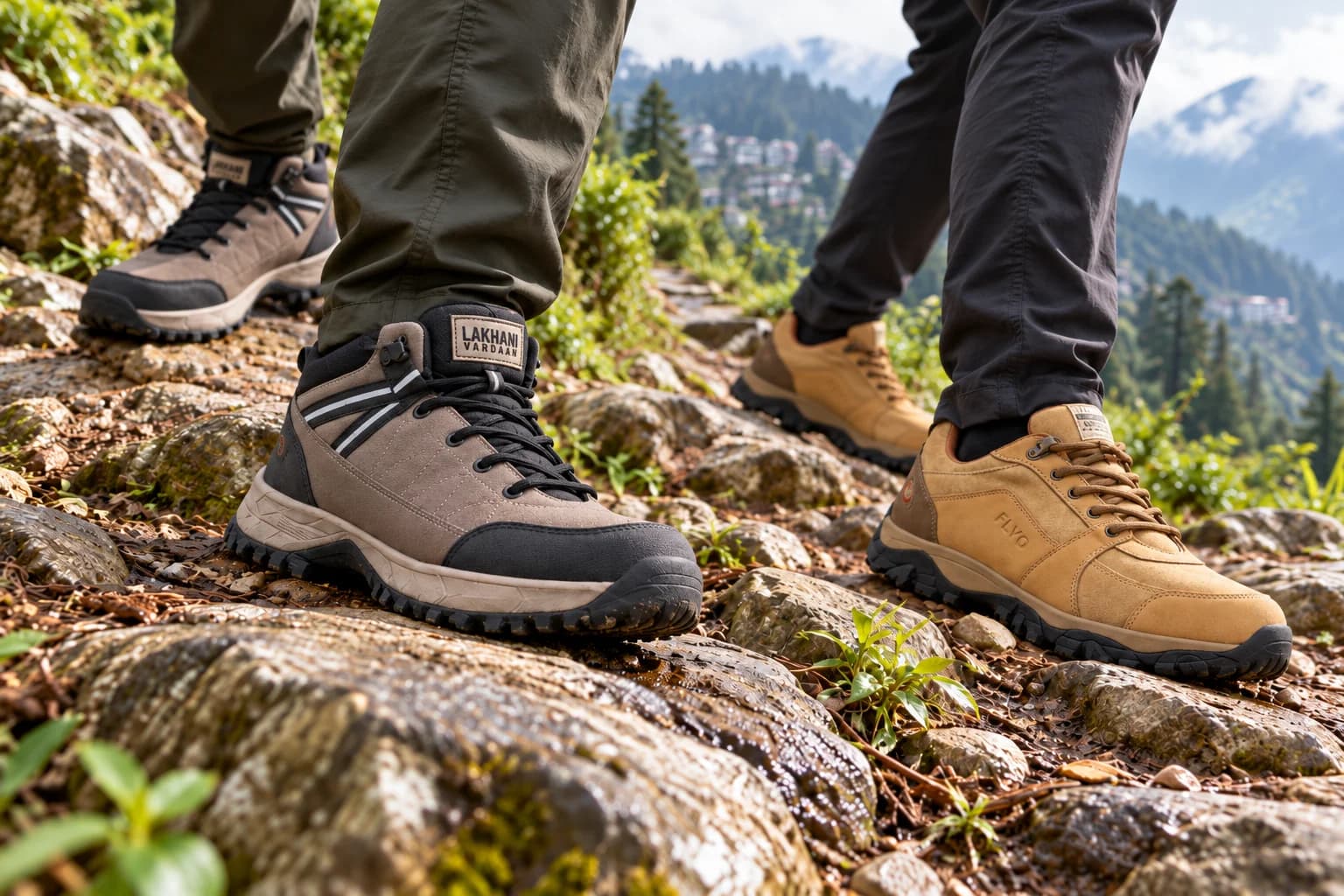
- Suggested hero image: Trekking shoe on a rocky Indian hill trail with a visible, uneven path.