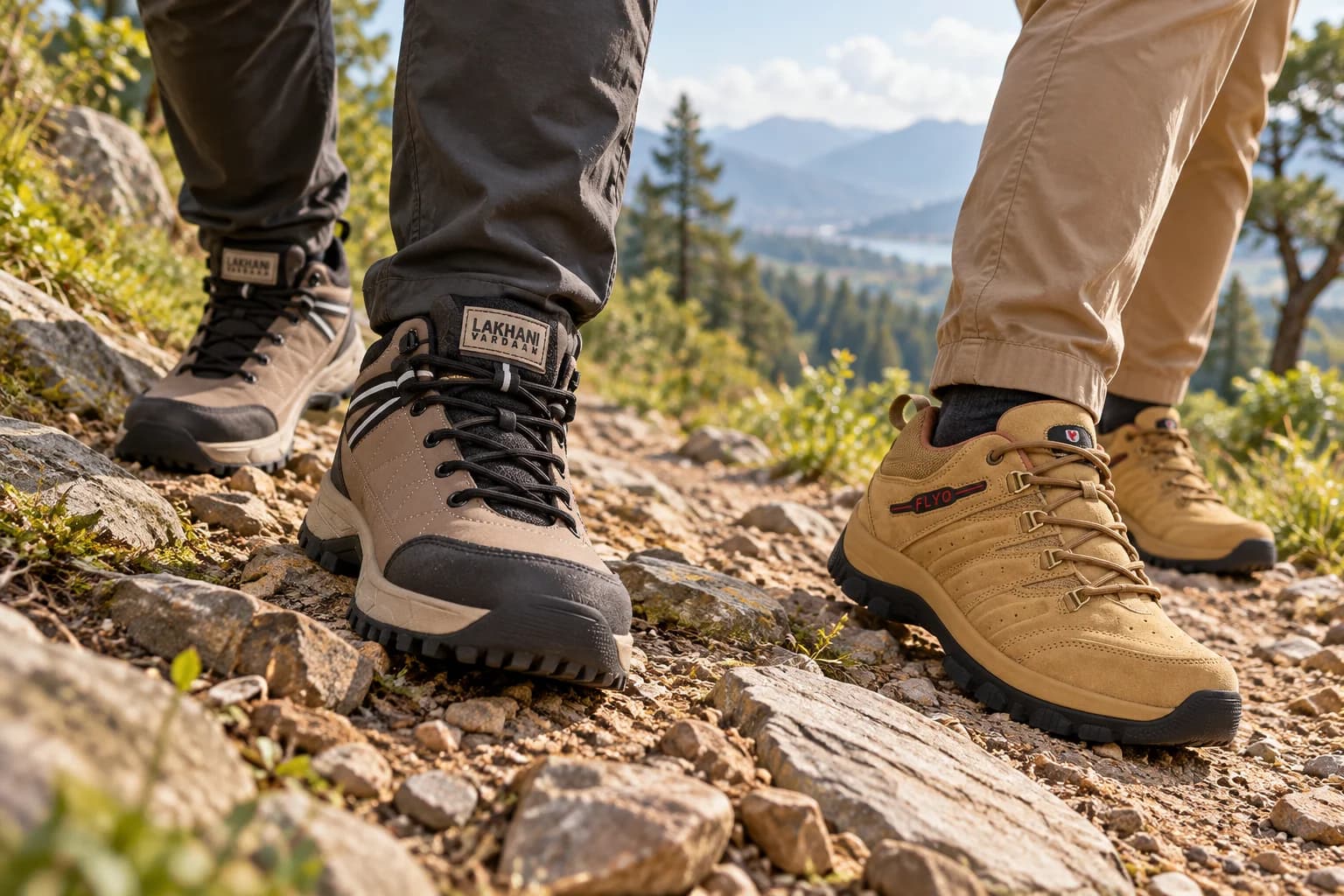
Hiking Shoes vs Trekking Boots: Which Is Better for Weekend Treks?
Hiking shoes and trekking boots are built around the same broad goal: helping the wearer move across outdoor terrain. The main differences are usually ankle coverage, weight, structure and the conditions for which the footwear is intended.
For a weekend trek, lighter hiking shoes may feel natural on short, established trails. More structured trekking boots may be useful when the route is rough, conditions are wet or the backpack is heavier. Neither category is automatically safer or more comfortable. Fit, outsole, experience and route conditions must be considered together.
What Is the Difference Between Hiking Shoes and Trekking Boots?
Hiking shoes generally have a low-cut collar below the ankle and resemble robust outdoor shoes. They often prioritise lower weight, flexibility and an easy transition between town and trail.
Trekking boots commonly extend around or above the ankle and use a more structured upper. They may offer greater coverage from debris and shallow mud and can feel more supportive under load. The extra material may also add weight, warmth and drying time.
Names are not standardised across every manufacturer. A product called a trekking shoe may be more substantial than another product called a hiking boot. Inspect the actual construction and intended use rather than choosing by title alone.
How Do Ankle Coverage, Weight and Flexibility Compare?
Ankle coverage
Low-cut shoes allow free ankle movement and reduce material around the foot. Mid- or high-cut boots provide additional coverage against small stones, vegetation and some surface moisture entering from the side. A higher collar does not guarantee that the wearer cannot roll an ankle.
Weight
Lighter footwear can reduce the effort of repeatedly lifting the feet, particularly on straightforward routes. Heavier footwear may contain more protective or structural material. Weight should be justified by the route rather than treated as proof of quality.
Flexibility
Hiking shoes often flex more easily, which can feel comfortable on established trails. Boots may use a firmer platform to feel stable on rough surfaces or under load. Excessive stiffness can feel tiring on easy ground, while excessive flexibility may feel less controlled on sharp or uneven terrain.
Which Is Better for Short, Easy Trails?
For a short, dry, clearly marked trail with limited elevation change, hiking shoes are often the practical option. They can provide suitable tread and protection without the weight of a substantial boot. They may also be easier to use during the journey before and after the trek.
“Easy” should be verified rather than assumed. A short route can still contain wet rock, loose gravel or steep steps. Recent weather may transform a normally straightforward path. Check local information and assess whether the shoe’s outsole and upper suit those conditions.
Sports shoes may work on some maintained paths, but road or gym designs are not necessarily built for loose surfaces. The existing hiking boots buying guide provides additional selection guidance.
When Might Trekking Boots Be More Suitable?
Boots may be preferable when the route is rocky, muddy, overgrown or expected to remain wet; when debris protection matters; or when carrying a heavier backpack. They can also be useful in colder conditions where additional coverage is desired.
Specialised conditions require more than ordinary boots. Snow, ice, high-altitude routes and technical terrain may demand compatible traction equipment, particular sole stiffness and expert guidance. A general consumer boot should never be presented as suitable for every mountain environment.
Boots also need preparation. A new stiff pair should not be worn for the first time on a long trek. Test it on shorter walks, confirm sock compatibility and learn how to lace it for uphill and downhill sections.
How Do Terrain, Weather and Backpack Weight Affect Your Choice?
Terrain
Maintained forest paths and compact soil may suit lighter hiking shoes. Loose rock, sharp edges and irregular steps may justify a protective upper and more stable platform. Deep mud can overwhelm shallow tread, while wet smooth stone remains hazardous regardless of footwear.
Weather
Breathable low-cut shoes can feel comfortable in dry heat. More closed footwear may offer useful protection in cold or wet conditions but can become warm and may dry slowly. Read waterproof vs water-resistant trekking shoes before relying on wet-weather claims.
Backpack weight
A heavier load changes balance and increases the forces managed during each step. Some trekkers prefer a firmer, more structured platform under load. The correct choice depends on experience, conditioning, terrain and fit; reducing unnecessary pack weight may be more valuable than selecting the heaviest boot.
Hiking Shoes vs Trekking Boots: Decision Table for Weekend Trekkers
| Decision factor | Hiking shoes | Trekking boots |
|---|---|---|
| Collar height | Usually below ankle | Usually mid or high cut |
| Weight | Generally lighter | Generally heavier |
| Flexibility | Often greater | Often more structured |
| Easy maintained trail | Often suitable | May be more than needed |
| Rocky or debris-filled trail | Depends on protection and sole | Added coverage may be useful |
| Warm, dry conditions | Often more ventilated | Can feel warmer |
| Wet conditions | Low collar can admit water | More coverage, but not automatically waterproof |
| Heavier backpack | May suit experienced users on suitable terrain | Firmer construction may feel preferable |
| Town-to-trail use | Often more versatile | More specialised appearance and feel |
| Break-in and testing | Still required | Especially important for structured pairs |
Use the table to narrow the category, then assess the individual model. Explore the Lakhani Hiking Boots range and the broader Performance & Outdoor collection while verifying product-specific construction and intended use.
What Should You Check Before Your First Trek?
Confirm route information
Check distance, elevation, terrain, water crossings, weather and current advisories. Ask the organiser what footwear is expected. “Weekend trek” can mean anything from a two-hour nature trail to a demanding overnight route.
Test fit with trekking socks
The heel should stay secure and the toes should not hit the front on descents. There should be usable toe room without the foot sliding. Test later in the day and on a safe incline where possible.
Inspect the complete shoe
Look at tread condition, flex, toe protection, laces, stitching and the upper–sole bond. Check that removable insoles lie flat. Do not take footwear with visible separation or severely uneven wear.
Build familiarity
Wear the pair on progressively longer walks before the trek. Practice lacing and learn whether socks bunch or create pressure. Bring spare dry socks and laces where appropriate.
Plan for care after the trek
Remove loose dirt, dry footwear naturally in shade and follow the manufacturer’s instructions. Do not place wet footwear against a heater. Store only when fully dry.
The hill-station guide explains how to choose trekking shoes for rocky and uneven Indian trails. The existing article on trekking shoes vs hiking boots offers another overview; this draft should be reviewed for differentiation before publication to avoid content overlap.
Frequently Asked Questions
Are trekking boots too heavy for beginners?
Some can feel heavy, but weight varies. Beginners should select footwear for the route and test it beforehand rather than choosing the lightest or heaviest option automatically.
Can hiking shoes be used in the mountains?
They can suit some maintained mountain trails in appropriate conditions. They are not automatically suitable for snow, ice, technical routes or every high-altitude environment.
Do high-top boots prevent ankle injuries?
No footwear can guarantee injury prevention. A higher collar may add coverage or a supported feeling, but fit, terrain, fatigue, strength, load and movement also affect risk.
Editorial handoff
- Publishing status: Unpublished draft.
- Cannibalisation review: Compare carefully with the existing trekking-shoes-vs-hiking-boots article before approval; consolidate or redirect if search intent overlaps materially.
- Verification: Outdoor-footwear and safety reviewers must approve all route and injury-risk wording.
- Suggested hero image: Low-cut hiking shoe and mid-cut trekking boot beside a weekend backpack.