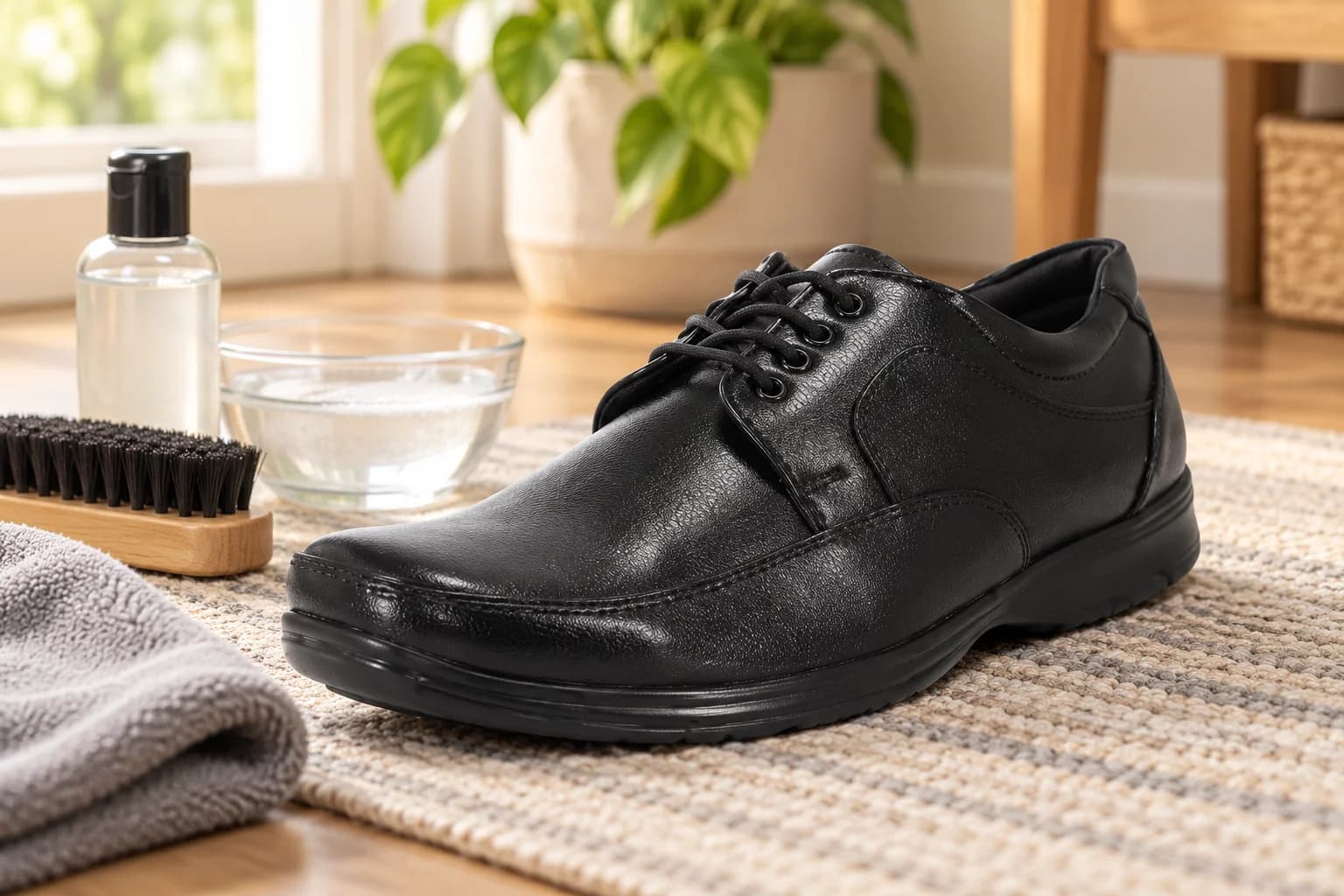
How to Clean Black Synthetic Leather Shoes Without Peeling or Cracking
Black synthetic leather shoes are popular for work because they can look neat and are generally easy to wipe clean. Their coated surface, however, should not be treated like durable plastic or genuine leather. Soaking, harsh chemicals, aggressive scrubbing and direct heat can weaken the finish and may accelerate cracking or peeling.
A safer routine uses very little moisture, light pressure and sufficient drying time. Always begin by checking the product’s own care instructions because synthetic materials and finishes vary.
What Do You Need to Clean Synthetic Leather Shoes?
Prepare a small kit before starting:
- A soft, dry brush or clean microfibre cloth.
- A second soft cloth for damp cleaning.
- A bowl of room-temperature water.
- A small amount of mild soap, used only when necessary.
- Dry absorbent cloths or plain paper for the interior.
- A soft brush reserved for outsole edges.
- A product specifically labelled for the relevant synthetic surface, if needed.
Avoid stiff brushes on the upper, abrasive cleaning pads, bleach, acetone, strong alcohol solutions and household multipurpose cleaners. Do not assume that a genuine-leather polish or conditioner is safe for a coated synthetic upper.
How to Clean Black Synthetic Leather Shoes Step by Step
1. Remove loose dust
Take out removable laces and insoles if the manufacturer permits it. Tap the soles together gently outdoors to dislodge dry dirt. Use a soft brush or dry cloth to lift dust from the upper, seams and the line where the upper meets the sole.
This dry stage matters. If water is added immediately, loose dust can turn into a muddy film and may be rubbed across the finish.
2. Test a hidden area
Dampen a cloth with plain water, wring it thoroughly and test it on a small, less visible section. If colour transfers, the surface becomes tacky or the finish changes, stop and follow the product-specific guidance.
Any new cleaner should also be patch-tested. “Suitable for shoes” is not precise enough; the label should identify compatibility with the material.
3. Clean the upper with minimal moisture
For ordinary dust and light marks, wipe the upper with a barely damp cloth. Work in small sections using light strokes. Do not flood seams or repeatedly scrub one spot.
If plain water is insufficient and the care label permits mild soap, dilute a very small amount in water. Apply the solution to the cloth rather than pouring it onto the shoe. Wipe again with a separate cloth dampened only with clean water to remove residue.
Clean laces separately according to their material. Keep moisture away from decorative coatings, prints or bonded details unless their care instructions allow it.
4. Clean the sole separately
Use a different cloth or soft brush for outsole edges because they hold more grit. Support the shoe with one hand and avoid bending it excessively. Do not let dirty sole water run over the clean upper.
5. Dry and store correctly
Blot remaining moisture with a dry cloth. Place the shoes in a ventilated area at room temperature, away from direct sunlight, heaters and hair dryers. Loosely fill the interior with plain absorbent paper if it is damp, replacing the paper when necessary.
Do not store the pair until it is dry. Moisture trapped in a closed cabinet can contribute to odour and may affect adhesives and linings.
How to Remove Scuff Marks from Black Synthetic Leather Shoes
Begin with the same lightly damp cloth used for general cleaning. Many surface transfers will lift with gentle, repeated strokes. Do not increase pressure quickly; aggressive rubbing may burnish a matte finish or damage a thin coating.
If a mark remains, use only a cleaner stated to be safe for synthetic leather. Test it discreetly and apply the smallest practical amount. A black colour-restoring product may hide a superficial mark, but it cannot repair a cut or restore a separating surface layer.
Scuffs should also be distinguished from scratches. A scuff often consists of material transferred onto the surface. A scratch removes or cuts the finish and may remain visible after cleaning.
What Causes Synthetic Leather Shoes to Peel or Crack?
Peeling occurs when the surface coating separates from or breaks away from its backing. Several factors can contribute:
- Repeated bending at the same flex point.
- Heat and prolonged direct sunlight.
- Ageing of the coating.
- Harsh solvents or unsuitable polish.
- Excessive moisture followed by rapid drying.
- Long storage in hot, damp or poorly ventilated conditions.
- Friction against desk legs, steps or another shoe.
- Incorrect fit that forces the upper into deep folds.
Cleaning cannot prevent normal material ageing, but gentle care can avoid adding unnecessary stress. The article on why formal shoes crease explains how fit and flex points contribute.
Can You Restore Synthetic Leather Once It Starts Peeling?
Cleaning does not reattach a separating coating. Small cosmetic products may temporarily improve colour, but they do not recreate the original structure. Glue, thick polish or paint can leave a hard patch that bends differently from the surrounding material and may make the area more noticeable.
For a valued pair, ask a footwear repair professional whether a practical repair is possible. If peeling occurs in a large flex area, replacement may be more realistic. Stop using the shoe if the damaged area affects fit, lets water enter or exposes a rough surface that causes discomfort.
Which Cleaning Products Should You Avoid?
Strong household chemicals
Bleach, acetone, nail-polish remover and strong degreasers can strip or soften coatings. Multipurpose sprays may contain solvents or fragrances that leave residue.
Conventional leather conditioners without verification
Genuine leather products are formulated for natural material and may contain oils or waxes that sit unevenly on synthetic coatings. Use them only if both the shoe maker and care-product manufacturer state that the combination is suitable.
Abrasive pastes and scrubbers
Toothpaste, rough sponges and stiff brushes can create fine scratches or alter the surface sheen. A mark may disappear only because part of the finish was abraded away.
Excess water
The upper may look water-resistant, but seams, linings, foam and adhesives can still absorb moisture. Never submerge formal shoes or wash them under a running tap unless their specific care instructions explicitly permit it.
How Often Should Black Formal Shoes Be Cleaned?
Remove loose dust after wear, particularly following a dusty commute. Perform damp cleaning only when needed. Frequent wet cleaning is not automatically better; a quick dry wipe may be enough for routine maintenance.
Rotate pairs when possible and let them air before placing them in storage. Keep them in a cool, dry, ventilated space and avoid stacking objects on the upper. Browse the Lakhani formal shoes collection to compare available styles, while checking each product’s stated materials before applying any care method.
Frequently Asked Questions
Can synthetic leather shoes be washed with water?
Avoid soaking or machine-washing them. Use a well-wrung damp cloth unless the product’s care instructions explicitly allow another method.
Can you use ordinary leather polish?
Not automatically. Traditional polish may not suit a synthetic coating. Use only a compatible product and test it on a hidden area.
How often should black formal shoes be cleaned?
Dry dusting after wear and occasional damp cleaning when visibly needed is generally more appropriate than frequent heavy cleaning.
Editorial handoff
- Publishing status: Unpublished draft.
- Verification: Materials SME must confirm cleaning guidance before approval.
- Suggested hero image: Cleaning kit beside one black synthetic formal shoe.