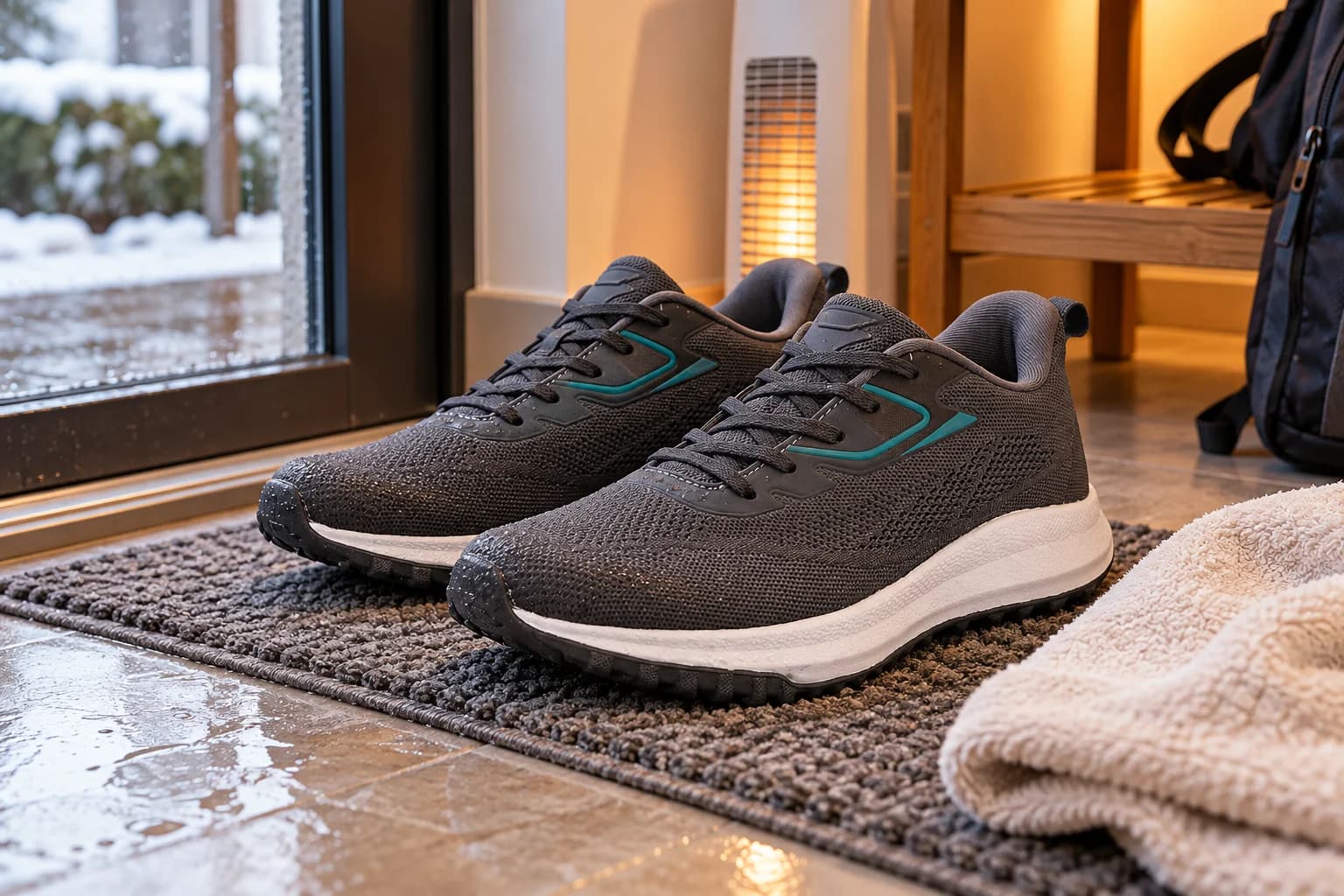
How to Dry Wet Shoes in Winter Without Damaging Them
Wet shoes dry more slowly in winter because cooler air holds less moisture and homes may have limited ventilation. Thick linings, foam and insoles can remain damp even when the upper feels dry. Wearing or storing shoes too soon can encourage odour, affect fit and place stress on adhesives and finishes.
Fast drying with a heater or hair dryer is tempting, but concentrated heat can deform synthetic parts, dry leather unevenly and weaken bonding. A safer process removes excess water first, opens the shoe and uses steady airflow at room temperature.
Why Do Shoes Take Longer to Dry in Winter?
Evaporation slows when temperatures are low and air remains humid or still. Shoe construction adds another barrier: water can sit beneath the insole, inside collar foam and along seams where air does not circulate easily.
Closed windows and crowded storage areas reduce ventilation. Placing several wet pairs together also raises local humidity. A surface that dries quickly—such as a coated synthetic upper—can hide moisture inside the lining.
Drying time depends on how wet the shoes became, their materials, room conditions and whether removable parts were separated. There is no reliable universal number of hours.
What Should You Do Immediately After Your Shoes Get Wet?
Remove the shoes as soon as practical. Undo laces or open straps and pull the tongue forward. Take out removable insoles only if they are designed to be removed. Do not force glued components.
Blot the upper and sole with a dry absorbent cloth. If there is mud, follow the material-specific care guidance; aggressive wiping can grind dirt into textile or scratch a smooth finish. Pour out any standing water without twisting the shoe.
Keep the pair away from heaters while deciding the next step. Direct heat can begin causing damage before the inside is actually dry.
How to Dry Wet Shoes Safely at Home
Remove moisture from the interior
Loosely fill the shoes with plain absorbent paper or clean cloth. The material should contact the lining without stretching the upper. Replace it when it becomes damp. Avoid printed paper if ink transfer could mark a light lining.
Do not pack the toe tightly. Dense stuffing can block airflow and distort the shape. The aim is to draw out moisture while keeping the shoe open.
Use ventilation
Place the shoes in a dry, shaded area with moving air. A normal room fan can support airflow when positioned at a safe distance; it does not need to blow hot air. Raise the shoes slightly or place them on a rack so air can reach around the sole.
Turn the pair occasionally. Keep it away from direct sunlight through a window, radiators, room heaters, stoves and heated floors unless the manufacturer specifically approves such use.
Dry insoles separately when removable
Lay removable insoles flat in a ventilated area. Do not balance them on a heater or bend them to squeeze out water. Laces can be dried separately according to their material.
Reassemble the shoes only when the upper, lining, insole and laces are all dry. Putting a dry insole into a damp shoe traps moisture again.
How to Dry Different Types of Shoes
Sports shoes
Sports shoes often contain mesh, foam, synthetic overlays and several bonded layers. Open the tongue, remove permitted components and use airflow. Machine drying or direct heat can affect foam and adhesives. The article on removing smell from sports shoes explains why complete drying is important.
Explore the Lakhani sports shoes category and check the care instructions for the specific pair.
Synthetic leather shoes
Wipe the coated surface and focus on the damp lining and seams. Do not assume that a dry-looking upper means the interior is ready. Avoid leather conditioner unless the product is confirmed as suitable for the synthetic surface.
School shoes
Children may need the shoes the next morning, but speed should not override safety. Open straps or laces fully, use absorbent paper and provide airflow. If the pair remains damp, use an approved dry alternative rather than sending a child to school in wet footwear. The School Shoes category contains current options, while the cleaning guide explains care for black school shoes.
Genuine leather footwear
Blot leather and let it dry slowly in its natural shape. Once fully dry, it may need a compatible conditioner according to the product’s instructions. Do not condition a wet upper or use heat to accelerate drying.
Why Should You Avoid Direct Heaters and Excessive Heat?
Heat does not reach every layer evenly. The upper or outsole may become hot while moisture remains trapped inside. Rapid drying can shrink or stiffen some materials, warp components and affect adhesives.
Hair dryers create concentrated heat and can push hot air very close to one area. Radiators and room heaters may overheat the sole or upper without obvious warning. Fire risk is another reason not to leave footwear beside heating equipment.
Room-temperature ventilation is slower but gives moisture time to move out without the same thermal stress.
How Can You Prevent Odour and Material Damage While Drying?
- Remove wet socks and never leave them inside the shoes.
- Use clean absorbent paper and replace it regularly.
- Keep shoes out of closed bags and cupboards.
- Clean mud and contaminants using the approved method.
- Separate removable components.
- Rotate footwear so a damp pair is not worn prematurely.
- Wait for internal foam and lining to dry, not only the surface.
- Store the shoes only after checking for hidden dampness.
Do not cover odour with perfume while the shoe is wet. Fragrance does not remove retained moisture or residue.
What Should You Do If Your Shoes Remain Damp After Drying?
Move them to a better-ventilated area, replace saturated paper and allow more time. Check whether water is trapped under a removable insole or inside a thick collar. Do not increase heat simply because drying is slow.
If the shoe develops persistent odour, visible mould, surface separation, stiffness or a changed shape, stop wearing it and seek product-specific care advice. A repair professional may be able to assess valuable footwear. Shoes with damaged structural bonding or an unstable sole may need replacement.
Frequently Asked Questions
Can you use a hair dryer on wet shoes?
It is safer to avoid concentrated hot air unless the manufacturer explicitly permits it. Use absorbent material and room-temperature ventilation instead.
How long should wet shoes dry?
Until every layer is dry. Time varies with saturation, construction, temperature, humidity and airflow, so touching only the upper is not enough.
Can newspaper help absorb moisture inside shoes?
Paper can help, but printed ink may transfer to light linings. Use plain absorbent paper where possible and replace it when damp.
Editorial handoff
- Publishing status: Unpublished draft.
- Verification: Product-care and materials reviewers must approve drying instructions.
- Suggested hero image: Wet shoes opened with removable insoles and absorbent paper beside a room fan.