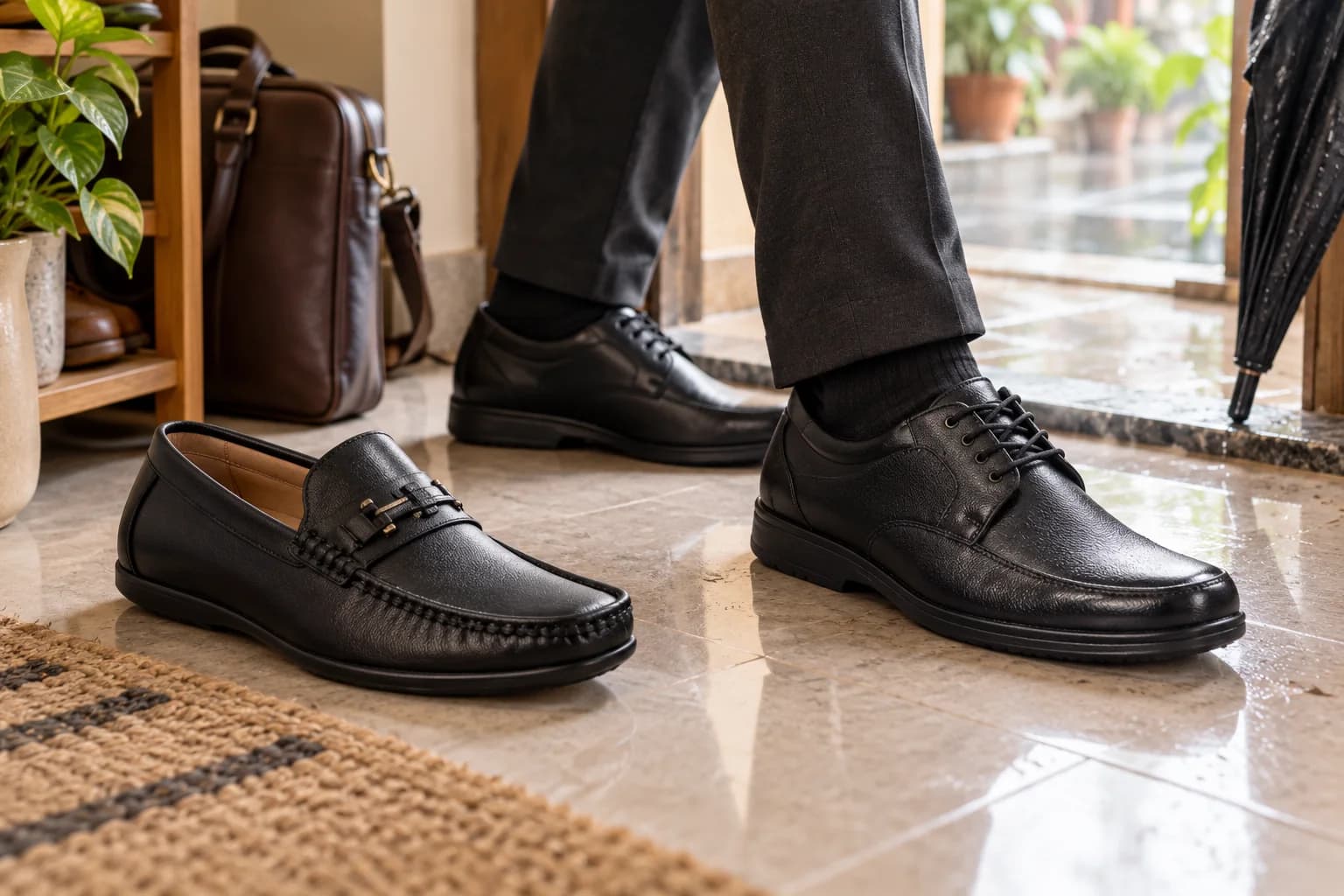
How Does Indian Weather Affect Leather Shoes?
Leather shoes in India may face intense summer heat, airborne dust, high humidity, monsoon moisture and large differences between indoor and outdoor conditions. These changes affect the upper, lining, finish, adhesives and even the way a shoe smells after use.
Good care does not require polishing every day or owning a shelf of products. It requires removing dirt before it becomes embedded, drying shoes slowly, maintaining suitable ventilation and using only treatments that match the material and finish.
How Do Indian Weather Conditions Affect Leather Shoes?
Leather is a natural material that interacts with moisture and heat. It can absorb perspiration and environmental humidity, then release that moisture as it dries. Repeated cycles without sufficient recovery time can leave the material stiff, misshapen or vulnerable to mould.
The word “leather” also covers many finishes. Smooth leather, suede-like surfaces, heavily coated leather and corrected-grain finishes do not share one universal care method. Product-specific instructions should take priority over general advice.
Synthetic leather behaves differently because it commonly has a polymer coating over a backing. Before applying any cleaner or conditioner, confirm whether the upper is genuine or synthetic. The guide to leather vs synthetic leather office shoes explains the distinction.
What Happens to Leather Shoes in Hot and Dry Weather?
High heat can accelerate moisture loss from leather. Prolonged exposure to direct sun, a closed vehicle or a hot storage area may leave the upper dry and can affect surface finishes and adhesives. Very rapid drying after the shoes become wet is particularly risky because different parts may contract at different rates.
Perspiration is also relevant in summer. Even if the outside remains dry, the lining and insole may retain moisture after a long commute. Putting the pair immediately into a closed cabinet traps that moisture.
After wear, loosen the laces, open the shoe and allow it to air in shade. Rotate pairs where possible. Use a suitable conditioner occasionally rather than applying a heavy layer every time; too much product can build up and alter the finish.
Why Can Humidity and Monsoon Moisture Damage Shoes?
Humidity slows evaporation. A damp pair may remain moist for much longer during the monsoon, creating conditions in which odour and mould can develop. Water can also carry dirt into seams and leave marks on some finishes.
Leather formal shoes should not be assumed waterproof. Even if the upper repels a few drops, moisture can enter through stitching, the tongue, the shoe opening and the upper–sole junction. Walking through deep water can also affect components inside the shoe.
If shoes become wet, remove surface dirt gently, blot excess moisture and let them dry at room temperature with air circulation. Use plain absorbent paper inside and replace it as it becomes damp. Avoid newspaper if ink transfer is a concern. Never place the pair on a radiator, under a hair dryer or in harsh sunlight.
How Do Dust and Pollution Affect Leather Footwear?
Fine dust settles around seams, creases and the welt area. When left in place, it can mix with moisture and become more difficult to remove. Grit can also create abrasion when the upper flexes or when polish is rubbed over an unclean surface.
Use a soft brush or cloth after dusty journeys. This small habit is often more useful than occasional aggressive cleaning. Pay attention to the line where the upper meets the sole and beneath the laces.
Pollutants and road splash may contain unknown residues. Treat marks promptly with the gentlest suitable method, following the manufacturer’s instructions. Test any cleaning product on an inconspicuous area.
How to Care for Leather Shoes in Summer, Monsoon and Winter
| Season or condition | Main risk | Practical routine | Avoid |
|---|---|---|---|
| Hot summer | Drying, perspiration and trapped heat | Air after wear, rotate pairs and condition only when appropriate | Closed cars, direct sun and heavy product buildup |
| Humid monsoon | Slow drying, mould and water marks | Blot moisture, use absorbent paper and dry with ventilation | Heaters, sealed storage and wearing while still damp |
| Dry winter | Loss of suppleness and surface dullness | Remove dust and use a compatible conditioner when needed | Over-conditioning and applying product over dirt |
| Dusty commute | Abrasion and embedded grime | Soft dry brushing after wear | Hard scrubbing and polishing without cleaning |
Summer routine
Allow the interior to dry after every wear. Alternate between pairs where practical. Store shoes away from windows and heat sources. If the leather begins to feel dry, apply a small amount of compatible conditioner after cleaning and patch-testing.
Monsoon routine
Check the forecast and choose footwear appropriate for expected exposure. If formal shoes become wet, do not postpone drying until the next morning. Remove surface water, open the shoes, use absorbent paper and provide ventilation. Clean only after loose mud has dried enough to be lifted safely.
Winter routine
Dry winter air can make some leather finishes feel less supple. Maintain regular dust removal and condition only as required. A thin, even application is preferable to repeated heavy layers.
What Is Different About Caring for Genuine and Synthetic Leather?
Genuine leather may benefit from a compatible conditioner that helps maintain suppleness. The correct product depends on the leather finish. Suede and nubuck require different tools and products from smooth leather, while heavily coated surfaces may not absorb conditioner evenly.
Synthetic leather should not automatically receive leather oils, waxes or conditioners. Its surface is manufactured and may react poorly to solvents or oily products. Basic care normally begins with dry dust removal and a lightly damp cloth. Read How to Clean Black Synthetic Leather Shoes before treating a synthetic formal pair.
For both materials, less is often safer. Test first, use minimal moisture and stop if colour or texture changes.
How Should You Store Formal Shoes in Indian Homes?
Choose a cool, dry area with some air movement. Do not place recently worn shoes directly into an airtight box. Allow them to air first, particularly after humid travel or long office hours.
Use correctly sized shoe trees or light shape support where appropriate. Do not over-stretch the upper. Keep pairs off damp floors and away from leaking walls. During humid periods, inspect stored shoes regularly rather than leaving them untouched for months.
Silica gel or another moisture-control product may help in an enclosed space, but it is not a substitute for drying wet footwear. Follow the product’s safety and replacement instructions, and keep such materials away from children and pets.
A Simple Weekly Care Routine
- Inspect the upper, sole edge and interior.
- Remove loose dust with a soft brush or cloth.
- Check whether the pair is fully dry.
- Clean visible marks using the material-appropriate method.
- Apply compatible polish or conditioner only when needed.
- Check laces and heel wear.
- Store with light shape support in a ventilated location.
Readers can explore the Lakhani formal shoes range and should verify the stated upper material and care instructions for the individual style.
Frequently Asked Questions
Can leather shoes develop mould during monsoon?
Yes. Persistent moisture, humidity and poor ventilation can allow mould to grow. Dry shoes before storage and inspect stored pairs regularly.
Should leather shoes be dried in direct sunlight?
No. Strong sunlight and heat can dry leather too rapidly and may affect the finish or adhesives. Dry at room temperature in a ventilated shaded area.
How often should leather shoes be conditioned?
There is no universal schedule. It depends on the leather, finish, climate and wear. Condition after cleaning when the material needs it, using a compatible product sparingly.
Editorial handoff
- Publishing status: Unpublished draft.
- Verification: Materials SME must review seasonal care guidance and approve any future product recommendations.
- Suggested hero image: One leather formal shoe shown across summer, monsoon and winter settings.